Get Full Government Meeting Transcripts, Videos, & Alerts Forever!
Get email alerts on the Ssip Wastewater Capital topic
No spam. Unsubscribe anytime.
SFPUC reports progress and cost changes on Sewer System Improvement Program and Hetch Hetchy capital projects
Summary
The commission received a broad SSIP update: 18 projects are in construction with about $500 million spent, several projects experienced schedule and cost changes (including a $14.5M increase tied to coordination with power transmission work), and outreach and workforce goals were highlighted.
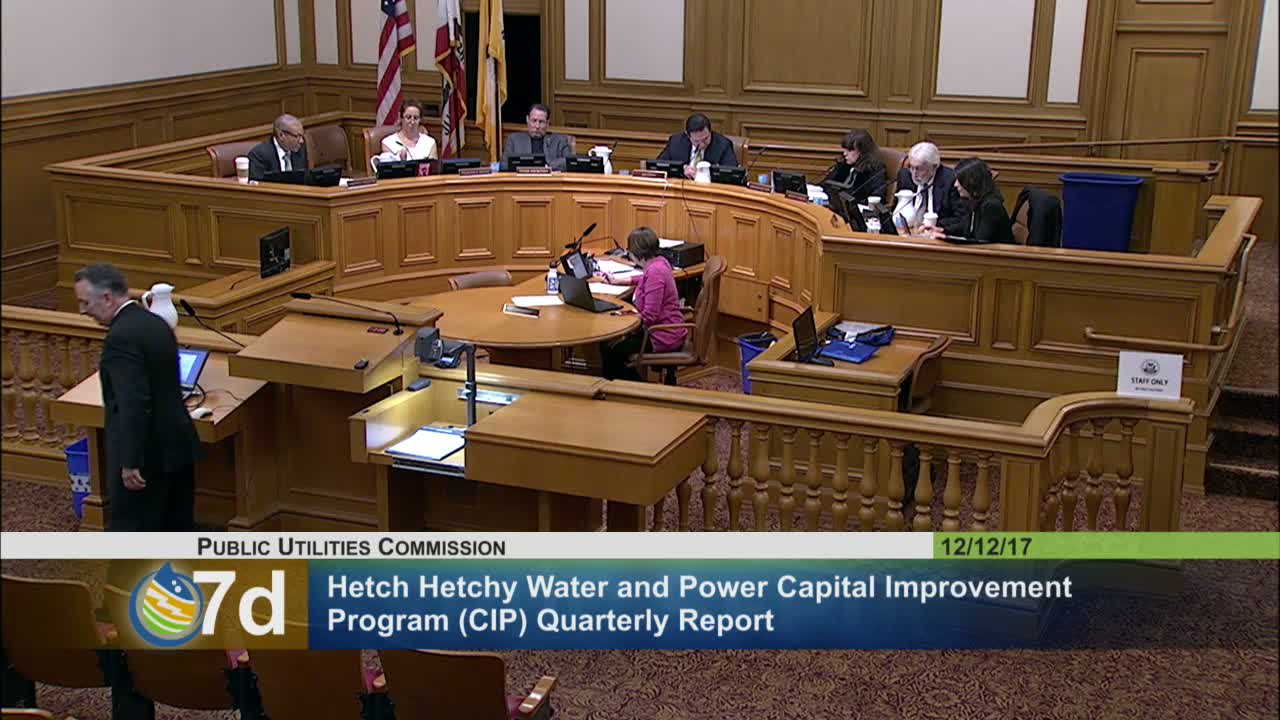
The San Francisco Public Utilities Commission on Dec. 12 reviewed progress on the Sewer System Improvement Program (SSIP) and other wastewater capital projects, outlining near-term construction milestones, schedule adjustments and workforce outcomes.
Karen Kubik, director of wastewater capital, said phase 1 of SSIP includes projects scoped against approved service levels representing roughly $2.9 billion. "We are currently underway with 18 projects in construction, expenditures of just under half a billion dollars," Kubik said, and highlighted recently approved biosolids digester designs and upcoming construction management contracts that will support a summer 2018 start for digester work.
Kubik summarized schedule and cost impacts across the program: primary and secondary switch-gear upgrades were previously delayed to align with a power-transmission corridor and are now estimated to cost roughly $14.5 million more; Northshore Wet Weather pump station experienced a six-month delay but a scope refinement that reduces cost by about $15 million; Griffith Pump Station faced unforeseen electrical work and code changes (about $8.3 million and five months impact). Several green-infrastructure projects in Chinatown and Haight Street are advancing with completion targets in early 2018 and March 2018 respectively.
The presentation also covered community engagement and workforce participation. Kubik reported that prime contracts with San Francisco residents accounted for 34% of hours and that San Francisco residents have earned a combined $7.6 million in wages and benefits on SSIP work to date; on some projects 68% of hours were performed by city residents, exceeding a 50% requirement.
Commissioners pressed for more detail on design decisions and comparative costs for green infrastructure. One commissioner requested briefing materials and renderings; staff agreed to provide renderings and to return with a more comprehensive capital overview during upcoming budget hearings. Kubik and staff also said they would coordinate follow-up presentations on project cost drivers and contracting approaches to explain differences in unit costs relative to peer projects.
Why it matters: SSIP and wastewater capital work address flood risk, aging infrastructure and regulatory requirements; changes in cost and schedule affect future budgets and sequencing of other capital work.
What's next: Staff said they will bring expanded reporting and visual materials to the commission in subsequent meetings and incorporate lessons learned into upcoming phases and the March re-baselining of Hetch Hetchy-related capital budgets.