Get Full Government Meeting Transcripts, Videos, & Alerts Forever!
Get email alerts on the Public Safety Sixth Street topic
No spam. Unsubscribe anytime.
Merchants and residents urge more foot patrols as Sixth Street dealers and open drug‑use persist
Summary
Merchants, property owners and community groups told the Police Commission that Sixth Street (between Mission and Howard) has worsening open‑drug activity and assaults, calling for sustained foot beats and better coordination among SFPD, DPW and the Central Market Community Benefit District.
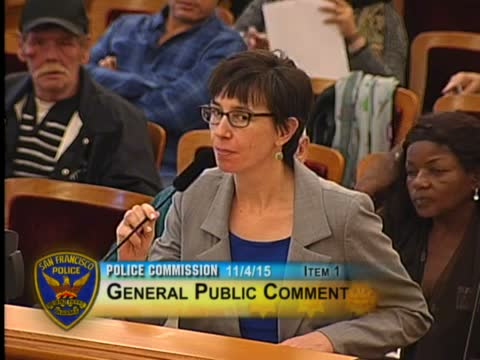
Residents and business owners from Sixth Street pressed the San Francisco Police Commission on Nov. 4 to take immediate steps to address persistent open‑drug dealing, public intoxication and threats that they say are driving away customers and jeopardizing worker safety.
Ellen Sotu, a project director with the Central Market Community Benefit District, described ongoing drug dealing, more aggressive street behavior, and a push of activity onto the Second Block of Sixth Street. She said recent redistricting moved parts of Sixth Street to Tenderloin Station but that merchants still need sustained beat officers south of Mission Street. "We need all of SFPD in help to make this area safe for these new businesses and the existing businesses or residents," Sotu told commissioners.
Multiple merchants echoed the request. A laundromat owner said drug users and people sleeping in front of businesses had made the laundromat a daily source of calls to police and described repeated threats to staff; a longtime Sixth Street merchant said assaults, knives and harassment have increased and called for a permanent, community‑based policing presence rather than intermittent foot beats.
Property owner Bruce Burge and business owners spoke of contractor safety concerns, loitering and daily transactions in broad daylight. Some commenters noted small improvements after Tenderloin station patrols increased, but urged that the activity continue farther down Sixth Street as redevelopment brings new businesses and customers to the corridor.
Commissioners and the Chief acknowledged the problem and noted a redeployment of some beat officers after redistricting; the Chief said upcoming academy classes will produce officers who can be assigned to Sixth Street. Commissioner Mazuko and others emphasized that a single solution will not work: clean‑ups, DPW coordination, community benefit district efforts and sustained SFPD foot patrols must operate together.
Public comment on the Sixth Street conditions fed the commission’s larger discussion of body‑worn cameras — many commentators said increased recording could help document incidents and lead to accountability — but commenters also cautioned that cameras alone would not solve the neighborhood’s long‑standing staffing, housing and public‑health challenges.
What’s next: Commissioners invited follow‑up with the Chief’s office and encouraged coordination among SFPD, DPW, the Central Market Community Benefit District and neighborhood stakeholders to develop a sustained foot‑beat plan and to report back to the commission.