Get Full Government Meeting Transcripts, Videos, & Alerts Forever!
Get email alerts on the Blue Shield Transition topic
No spam. Unsubscribe anytime.
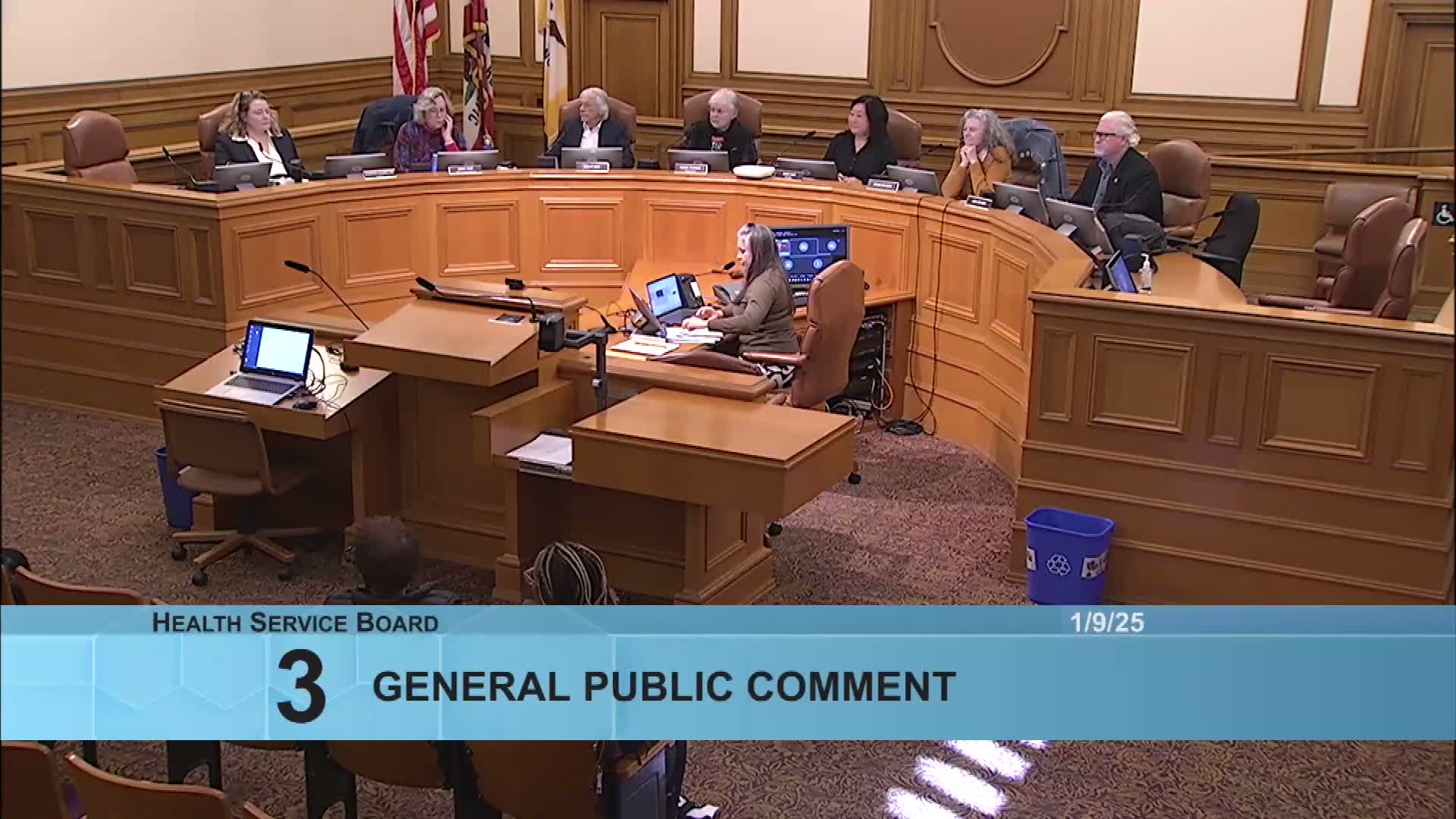
Health board hears complaints after Blue Shield Medicare PPO transition; insurers and SFHSS say issues are being addressed
Summary
Retirees and other members told the San Francisco Health Service Board they experienced ID‑card delays, provider authorization confusion and pharmacy problems after SFHSS moved Medicare‑eligible PPO members to Blue Shield. SFHSS and Blue Shield told the board the bulk of enrollments were processed on time, staffing and letter corrections have been,
San Francisco’s Health Service Board spent a sizeable portion of its January meeting reviewing complaints and implementation metrics after SFHSS moved roughly 19,100 Medicare‑age members into a Blue Shield Medicare Advantage PPO (MAPD PPO) plan.
Members told the board they faced delayed ID cards and welcome kits, provider confusion over prior authorization, and problems getting prescriptions filled. At the hearing, SFHSS operations manager Olga Stavinska Velasquez said the system sent enrollment files early so cards could be mailed starting Dec. 16 and that “a small number, around 7% of the records sent to Blue Shield” required manual processing and additional follow up to complete mailings and correct errors.
The concern from retirees and other callers was immediate and sustained. One in‑person commenter, Sarah Coe, described losing continuity of care at an acupuncture clinic she and her husband had used for 11 years because the clinic does not contract with Blue Shield’s specialty vendor; another caller described missing a spine procedure because the provider office said formal approval would not come for “7 to 14 days.” Several callers said they repeatedly encountered long phone waits when trying to reach HSS or Blue Shield.
Blue Shield senior manager Charles Lee told the board Blue Shield delivered ID cards and welcome kits to most members in mid‑December and has increased its concierge staffing to handle higher call volume. “Since 1/1, we have not experienced major system or other issues prior to or post 1/1,” Lee said, while acknowledging a limited number of transition problems and describing a corrective step after a templated CMS confirmation letter caused confusion about out‑of‑network prior authorization requirements.
Blue Shield and SFHSS both described specific fixes and outreach underway. Stavinska Velasquez highlighted an HSS call‑center feature that allows callers to be routed directly to Blue Shield’s concierge line without a separate transfer, and she said HSS member services is working overtime to resolve manual‑processing exceptions. Charles Lee said Blue Shield issued a correction letter where the templated CMS confirmation had introduced misleading language and that Blue Shield had developed written provider authorizations to reassure clinicians that existing prior authorizations would be accepted during the transition window.
Board members pressed for prompt fixes for members with urgent needs. Several public comment examples drove the point home: a caller said chemotherapy scheduling was at risk for some members; another described missing a pain management injection and enduring another week of pain while the matter was resolved. Board President Howe asked SFHSS and Blue Shield to post the welcome‑packet materials provided to the board so the public can review them.
Operational numbers the board heard: about 19,100 members were transferred to Blue Shield for the Jan. 1 effective date; roughly 7% of records required manual processing after the initial file transfer; SFHSS said its member services team has 11 benefit analysts responsible for both phone and in‑person support; Blue Shield reported increasing its dedicated concierge staff from about 22 to roughly 34 people to reduce wait times. Blue Shield reported an average speed to answer that rose in December (an average of about 64 seconds during the spike) and said staffing increases aim to lower wait times in January.
Blue Shield and HSS also described member programs they plan to emphasize as implementation stabilizes: in‑home or virtual visits, mailed lab kits, preventive outreach and targeted care management for conditions such as behavioral‑health needs, chronic respiratory disease, pain and cancer. Board members repeatedly raised SilverSneakers — the fitness‑access benefit included with many Medicare plans — after several callers said they could not find network facilities in parts of Marin County. Blue Shield said it is working with the SilverSneakers vendor to identify gaps and increase contracted facilities in affected counties.
The board did not take formal action on the Blue Shield update. Both SFHSS staff and Blue Shield said they will continue weekly operational reporting to HSS and that they will post the pamphlet and digital copies of member materials distributed to the board. Members and retirees should continue to use the HSS hotline and the Blue Shield concierge line, and SFHSS said it will escalate urgent clinical cases directly with Blue Shield when callers report imminent care needs.
Ending: Board members asked SFHSS to return with updated call‑center metrics, numbers of outstanding unresolved member issues and confirmation that providers (including hospital systems named by callers) are processing claims without disruption. SFHSS and Blue Shield told the board they will provide the materials shown to commissioners for public posting and that they will keep the board updated as transition exceptions are closed.