Get Full Government Meeting Transcripts, Videos, & Alerts Forever!
Get email alerts on the Tax Increment Financing topic
No spam. Unsubscribe anytime.
Brownsburg RDC receives annual TIF briefing; approves two resolutions to retain incremental tax revenue
Summary
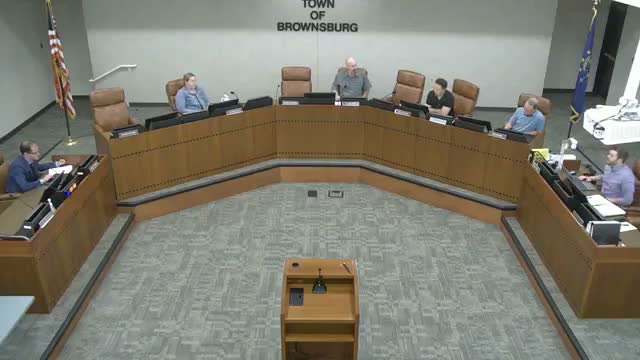
At its June 5 meeting, the Town of Brownsburg Redevelopment Commission heard the annual presentation required by Indiana Code 36-7-25-8 on tax increment financing (TIF) and approved two resolutions to continue capturing incremental assessed value for its allocation areas, including a 50% capture approach for the Wynne Farms allocation area.
The Town of Brownsburg Redevelopment Commission on June 5 received the annual informative presentation required by Indiana Code 36-7-25-8 on tax increment financing and approved two resolutions to retain incremental assessed value for the town’s allocation areas.
The presentation, given by staff and representatives from LWG CPAs and Advisors, summarized how TIF (tax increment financing) works, how Brownsburg has used TIF to fund past projects and debt service, and the commission’s recommendation that no incremental assessed value be released to other taxing units for the 2026 budget year for all allocation areas except Wynne Farms. The commission then approved Resolution 2025-02 RDC (no pass-through of dollars for allocation areas except Wynne Farms) and Resolution 2025-03 RDC (continue capturing 50% of increased assessed value in the Wynne Farms allocation area).
TIF refresher and examples Bob Swins of LWG CPAs and Advisors walked the commission through the mechanics of TIF, explaining the base assessed value (AV) is “locked in” when a TIF is created and that new development generates incremental AV that the town may reinvest in the allocation area. Swins described the state’s “BUPFOR” test for creating an allocation area, saying the test examines whether development would occur without the TIF and that an allocation area is often created to make a site “shovel ready” with infrastructure such as roads, sidewalks, sewer and water.
Swins also outlined projects the town has financed with TIF revenue or TIF-backed debt, citing the Arbuckle Commons expansion (Arbuckle 2), infrastructure work near the I‑70/Ronald Reagan Parkway interchange, construction along Northfield Drive, water and wastewater improvements along State Road 267, and roadway work that included a new traffic signal and an east–west connector near Lucas Oil Raceway. He said most TIF revenue currently is used to pay debt service, while remaining amounts support pay-as-you-go capital projects.
How Brownsburg manages impacts to other taxing units Presenters emphasized that TIF does not reduce the base amount other taxing units receive from property taxes; the incremental revenue is what is captured and reinvested. The town said it has taken steps to limit impacts on other taxing units: it generally does not capture personal property tax revenue in TIF areas, it excluded the large Perlogis site from TIF despite its combined assessed value of about $70 million, and in the Wynne Farms allocation area the town collects only 50% of the increased tax revenue with the remainder distributed to other taxing units. Staff noted the commission removed 284 residential parcels from Wynne Farms in February 2023.
Lifespan and accounting Presenters explained that allocation areas created today typically have a 25-year statutory life after they are first pledged to pay debt; older or legacy TIFs had different treatment under past law. The county assessor provides assessed-value data to the county auditor, which tracks allocation-area values; the town uses auditor data and assumed tax rates to project TIF revenues for budgeting. Staff said the redevelopment commission budgets predicted TIF revenues as part of the town’s normal budget process.
Questions from commissioners and attendees A member who identified themself as Kai thanked presenters and asked who maintains the accounting of assessed-value increases; staff said the county assessor is responsible for property assessments and the auditor maintains allocation-area records, with the town reviewing auditor data to ensure coverage. When asked how tax abatements interact with TIF, staff said the town sometimes grants tax abatements in a TIF area for significant investments but typically will “do one or the other. We don't do both.”
Votes at a glance - Resolution 2025-02 RDC: "A resolution of the Brownsburg Redevelopment Commission determining need to capture incremental assessed valuation for all allocation areas except Wynne Farms." Motion to approve made and seconded; approved by voice vote. Mover/second not specified in the record. Outcome: approved. - Resolution 2025-03 RDC: "A resolution of the Brownsburg Redevelopment Commission determining need to capture incremental assessed valuation for the Wynne Farms allocation area (50% capture to be released to other taxing units)." Motion to approve made and seconded; approved by voice vote. Mover/second not specified in the record. Outcome: approved.
What’s next Staff asked commissioners to remain briefly after the meeting to sign the two resolutions and said the commission expects to consider new business at the next meeting, currently scheduled for July 1. Staff also said they will distribute the presentation materials and follow up by email to confirm the July 1 date.
Sources: presentation and Q&A at the Town of Brownsburg Redevelopment Commission meeting, June 5, 2025; LWG CPAs and Advisors presentation prepared under Indiana Code 36-7-25-8.