Get Full Government Meeting Transcripts, Videos, & Alerts Forever!
Get email alerts on the Education Grading Policy topic
No spam. Unsubscribe anytime.
North Kingstown teachers urge delay and rewrite of proposed 6–12 grading policy
Summary
Teachers, parents and district staff pressed the school committee to delay adoption of a new 6–12 grading policy, arguing the draft’s reassessment language is vague, could impose heavy workload on teachers and would not address root causes such as chronic absenteeism and cell-phone distractions.
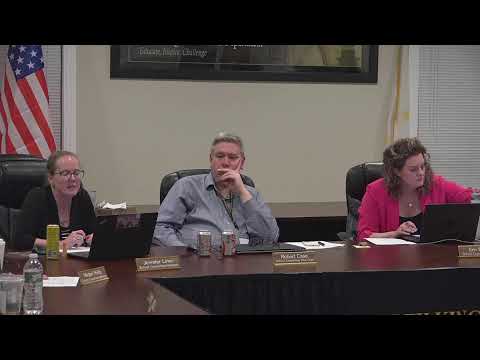
The North Kingstown School Committee on June 3 advanced discussion of a proposed 6–12 grading policy but did not adopt it after lengthy public comment and committee questions.
Teachers and several parents said they support consistent grading rules but urged the committee to delay final approval so the administration can refine language on reassessments and other requirements. At least five educators from North Kingstown High School described concerns that the policy — as written in the draft distributed the morning of the meeting — would create open-ended reassessment obligations and could unintentionally lower academic expectations for older students.
Teacher Lauren Brothers, who identified herself as a high school science teacher, said she supports high standards and was unsure what problem the policy seeks to fix. “From my experience ... the primary factors impacting student success are attendance and cell‑phone usage,” Brothers told the committee, arguing that unlimited retakes would not solve those underlying issues. Several other teachers who spoke echoed that emphasis on attendance and classroom engagement as the principal levers to improve outcomes.
Mathematics educator Jordan Albernaz cited the district’s strong PSAT and SAT math results and said broad, open-ended retake language could be impractical for high-school teachers managing heavy testing and grading loads. “Unlimited retakes without clear guidance are impractical and unsupported by research,” Albernaz said. He and others urged specific limits on reassessments, clearer timelines and concrete procedures so teachers can preserve high‑quality feedback and avoid burnout.
Committee members and administration said the policy team sought to create consistency across middle and high school grading and incorporate contemporary best practices on reassessment, but several members said the draft does not yet spell out the specific parameters teachers want. Superintendent Dr. Duva and committee representatives acknowledged teacher feedback and said the district would produce a revised draft that clarifies reassessment limits and distribution timing before a third reading. The committee asked administration to circulate that revision several days before the next meeting so staff and families can review it.
The committee did not vote on the policy at the June 3 meeting and moved the item to the next agenda for a further review and possible third reading. Administration and policy advisers said they would incorporate teacher suggestions — including clearer boundaries on the number and timing of retake opportunities, guidance on handling plagiarism and academic integrity cases with consideration for intent, and clarification of whether a 65 or 70 marks passing when the schools align middle and high school expectations.
Next steps: the committee asked administration to circulate an updated draft at least a few days before the next meeting and to provide a plain‑language summary of the key changes and of how the district will support implementation if the policy is approved.