Get Full Government Meeting Transcripts, Videos, & Alerts Forever!
Get email alerts on the Economic Development topic
No spam. Unsubscribe anytime.
Residents and officials discuss TIF, sewer extensions and workforce training as ways to spur housing and industry
Summary
After an IDHA presentation, community members and city staff debated tools to speed housing supply: buy and service edge parcels, use TIF and enterprise-zone incentives, pursue state grants, and bolster trades training to expand the local construction workforce.
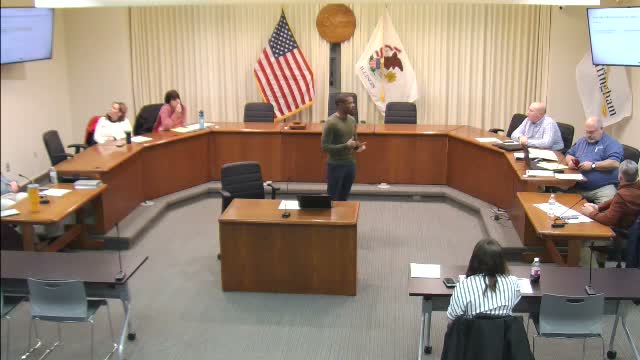
The focus-group meeting moved from presentation of housing data to a sustained discussion about how to make housing and commercial development feasible in Effingham. Participants and staff weighed tools such as tax increment financing (TIF), enterprise-zone incentives, targeted land acquisition, and grant-funded infrastructure to reduce developers’ upfront costs.
Several attendees argued the city must identify and prepare buildable parcels—edge-fill sites with existing sewer and water—so developers can avoid expensive sewer extensions. One resident said the city has to buy land and put infrastructure in to compete: "You're gonna have to identify whether it's on the North side of town ... some property that you can buy, and you're gonna have to invest like you would for the industrial" (paraphrase of a participant urging city investment).
City speakers described recent and potential funding tools: they said a $3,000,000 grant helped build industrial roads and that the city purchased 154 acres for industrial use, and they discussed using TIF and redevelopment agreements to cover streets, water and sewer extensions while noting public projects may require prevailing wages. Walton and staff also highlighted LIHTC and other state grant programs (DCEO, IDOT, USDA) as sources developers often cite when evaluating proposals.
Attendees emphasized workforce shortages as a constraint on housing production. Multiple speakers pointed to local CTE and regional career-academy programs that already place students with construction employers; the Home Builders Association vice president noted nearly every CTEC graduate had a job lined up. Participants proposed linking training, developer incentives and targeted lot acquisition as a package to increase housing starts.
No formal decisions or votes were recorded. Staff said next steps will include steering-committee review, public open houses on the draft plan, and later planning-commission and city-council hearings; they set a goal to complete the comprehensive-plan update by year-end.