Get Full Government Meeting Transcripts, Videos, & Alerts Forever!
Get email alerts on the Economic Development topic
No spam. Unsubscribe anytime.
Business owner urges Effingham to use gaming, cannabis revenue to offset 2024 building-code costs; council explains legal limits
Summary
Mark Mahood told the council new 2024 state building codes are raising construction costs and urged the city to set aside gaming and adult-use cannabis revenues to help developers. Council members and staff said the city is limited by state statutes as a non-home-rule community and described steps already taken to reduce local burdens.
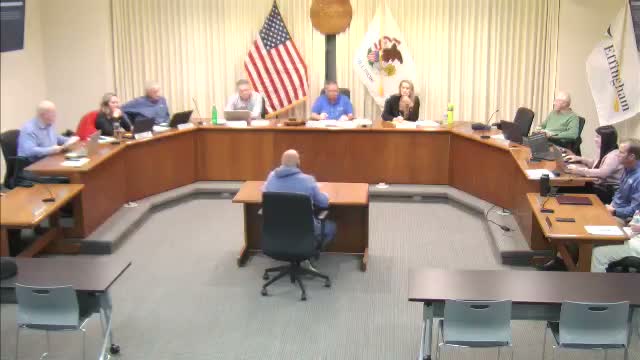
At the public-comment portion of the meeting, businessman and resident Mark Mahood urged the Effingham City Council to respond to higher construction costs resulting from the 2024 state building codes by using proceeds from video gaming and adult-use cannabis to subsidize developers or otherwise offset increased fees.
Mahood said he has been involved in multiple local projects and suggested that recent code adoptions may be making Effingham less competitive with nearby communities. He proposed the city set aside a large portion of gambling and marijuana revenue to help developers with new code-driven costs and to consider negotiating fees, utility hookups or other incentives to reduce upfront expenses. "Most of it, not all of it, is going to general funds for nothing," he said, urging targeted use of the funds.
Council members and staff responded that the state adopted new building codes effective Jan. 1 and that municipalities must meet the state minimums, though local amendments can be made in limited areas. A council speaker explained the city is a non-home-rule municipality and is bound by statutes that restrict how certain revenues (for example, TIF proceeds, video gaming or adult-use cannabis proceeds) may be spent; those statutory restrictions limit the city's ability to redirect such funds for developer subsidies. Staff and council also noted that the city had removed some costly state requirements (for example, residential sprinklers in some contexts) to lessen local impacts.
The exchange highlighted a common tension local leaders face when statewide code changes raise project costs: participants urged further review of fee structures and incentives, and staff said they continue to research legally permissible options.