Get Full Government Meeting Transcripts, Videos, & Alerts Forever!
Get email alerts on the Housing Needs topic
No spam. Unsubscribe anytime.
IDHA presents housing needs assessment; residents cite vacancy, housing-condition concerns
Summary
An Illinois Housing Development Authority planner presented a housing needs assessment to Effingham residents showing most parcels are residential, high single-family share and limited perceived vacancy; community members raised concerns about rental property condition, blight enforcement and how to convert vacant lots into housing.
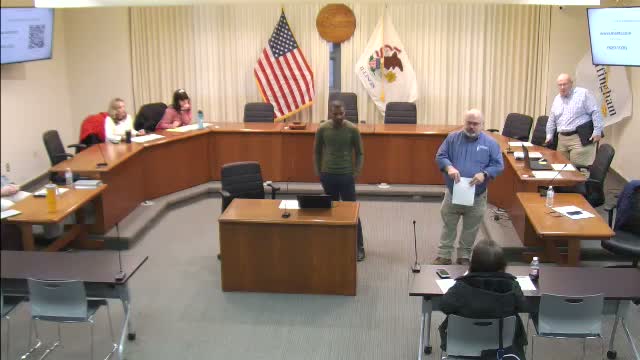
Christopher Walton, a community revitalization planner with the Illinois Housing Development Authority, presented the results of a housing needs assessment and housing-stock survey to an Effingham focus group. He told attendees the survey maps show about "71% of the community is residential" and that most residential buildings are single-family detached (a figure he reported near "91.2%").
Walton said volunteers completed a parcel-by-parcel exterior survey and that the team found roughly "98% of the residential parcels are actually occupied," with the perceived vacancy accounting for about 2% (46 lots in the volunteer count). He also summarized exterior-condition ratings: "57% of the residential exterior conditions were perceived excellent," 29.9% good, about 10% average, roughly 2% fair and 0.1% poor.
Residents pushed back on some perceptions and pressed for detail. One attendee who identified themselves as a resident said, "I counted 40, 50 empty lots," and asked whether the city could use tools like TIF financing or USDA programs to redevelop those parcels. Other participants asked how many of the 'vacant' parcels are actually privately held side yards, subdivider lots or otherwise unavailable for development; Walton acknowledged the survey recorded perceived vacancy and said parcel ownership and sale status would require follow-up research.
On enforcement and housing quality, the city representatives explained nuisance complaints (tall grass, trash, vehicles) are typically handled first through police outreach while dangerous or unsafe structures are routed to the building official. The meeting recorded interest in more active rental-property oversight: one resident proposed annual rental inspections with grading, citing a program elsewhere that assigns A–F ratings for rental units.
Walton and staff emphasized the housing needs assessment is a working document that will inform the comprehensive plan and grant applications; Walton said the full draft with maps and funding references would be posted online for public comment (he noted the presentation would be open for 14 days). The next procedural step is a steering-committee review in March followed by public open houses and planning commission and city council hearings toward a plan expected by year-end.