Get Full Government Meeting Transcripts, Videos, & Alerts Forever!
Get email alerts on the Community Concerns topic
No spam. Unsubscribe anytime.
Residents press board on ordinance waiver and light pollution; staff says code uses foot-candle standard
Summary
Two residents raised process and nuisance concerns: one argued the board improperly waived a second reading on a development ordinance; another presented photos alleging persistent light pollution from Valley Low Club courts. Staff said sports-court lighting is governed by foot‑candle limits at property lines and that proposed lighting changes will return to the commission.
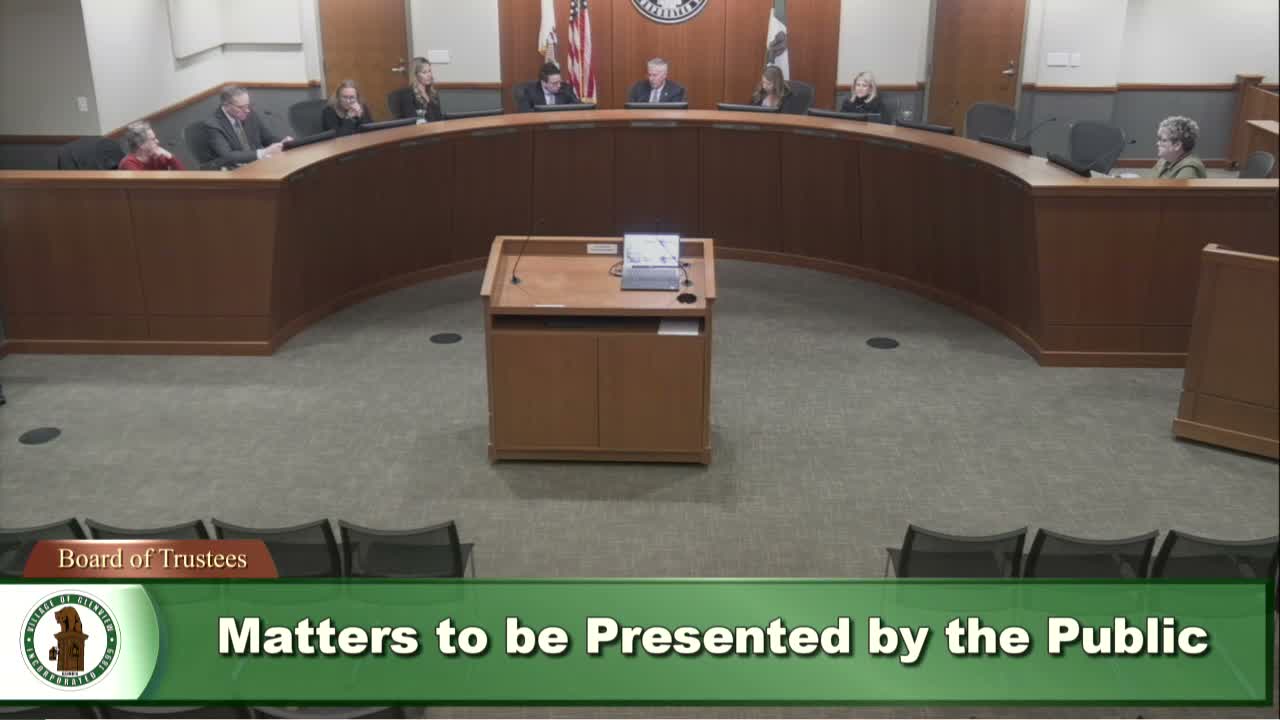
Public comment at the March 4 Glenview Village Board meeting focused on two complaints that drew extended trustee and staff discussion.
William Sites (1869 Prairie Street) criticized the board’s recent decision to waive a second reading of an ordinance related to a development at 1900 East Lake Avenue. Sites argued waiving a second reading should be rare and said such a waiver typically requires urgency, no public opposition and unanimity; he said trustees, not applicants, make motions and that the board’s administrative rules should not be casually waived. The village president acknowledged receipt of Sites’ letter and thanked him for speaking, and trustees declined to reopen the vote during the meeting.
Joe Nash (1844 Wildberry Drive, Unit E) then presented photos and described repeated problems with lighting he says originates at Valley Low Club courts roughly 200 feet from his home. Nash alleged prior promises about timers and screening were not kept, called the situation “gross negligence,” and said village enforcement and the club’s earlier commitments fell short. Nash said he has submitted complaints and believes lighting operations occur when courts are not in use.
Director Brady and other staff explained that village code measures sports‑court illumination using foot‑candle measurements at the property line and that sports‑court lighting is reviewed on a case‑by‑case basis with an associated lighting study. Brady said the club’s tennis-court lights have been turned off while the club develops plans for lower-profile fixtures, additional screening and clearer timing controls; any proposed modifications will return to the Development Adjustment Commission and then to the board for public review and formal approval. Trustee Cooper expressed sympathy for the neighbors and support for facilitating a compromise.
No enforcement decision or new ordinance was adopted at the meeting; staff said the club and neighbors are continuing discussions and the matter will be considered again by the commission as modifications are developed.
What’s next: staff and the club to pursue revised lighting plans and screening; proposed changes will go back to the commission and then to the board for review and possible conditions or approvals.