Get Full Government Meeting Transcripts, Videos, & Alerts Forever!
Get email alerts on the Municipal Budgeting topic
No spam. Unsubscribe anytime.
Glenview officials present structurally balanced 2026 budget but flag long-term cost pressures
Summary
Village staff told the Board of Trustees the proposed 2026 budget is structurally balanced, with staff projecting a $3.5 million operating surplus for 2025 and a modest $187,000 surplus for 2026, while warning rising police and fire pension costs and multi-year expense growth will create future deficits unless addressed.
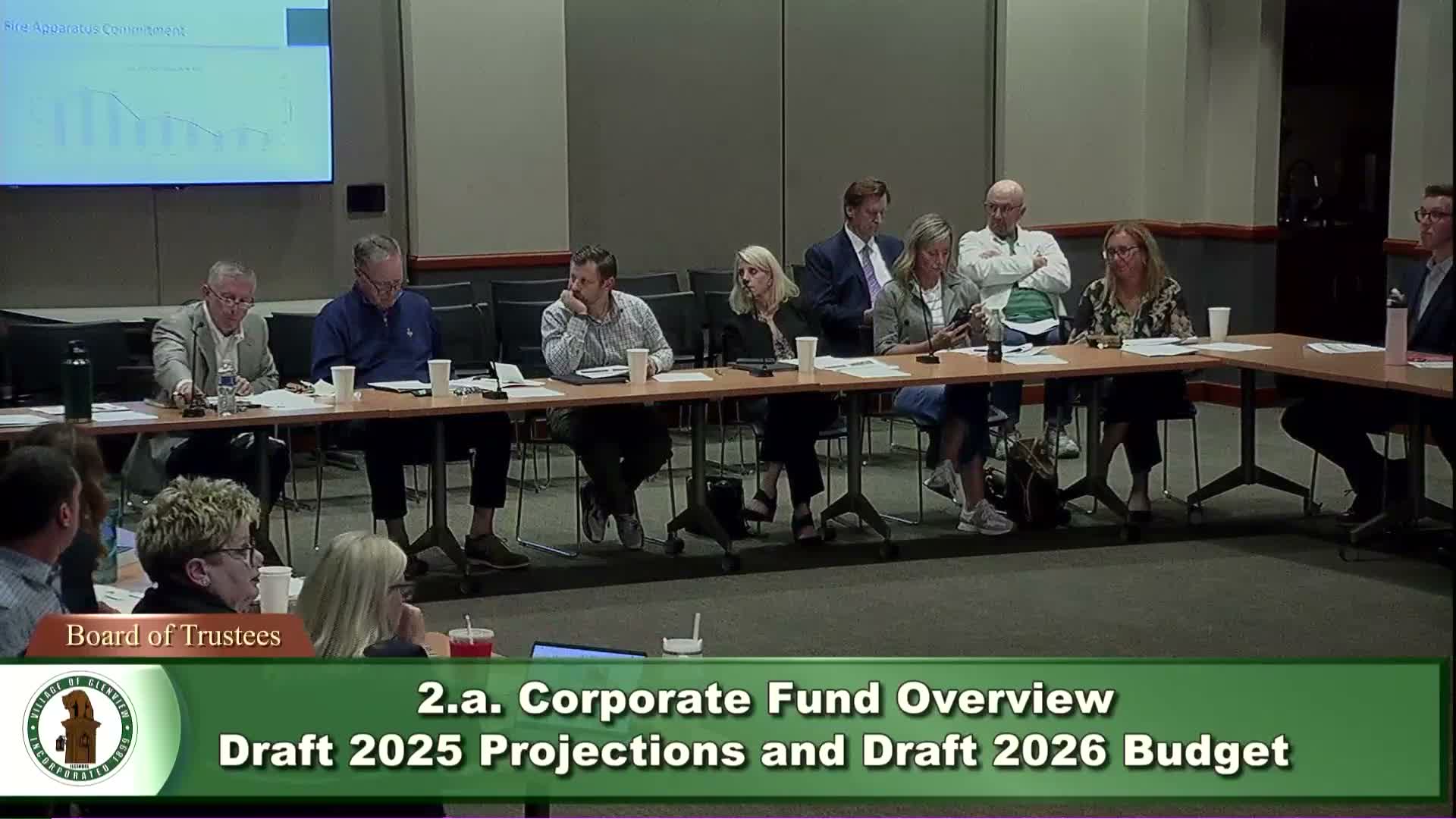
Glenview officials presented a structurally balanced budget for 2026 on Sept. 9, telling the Village Board that near-term surpluses mask multi-year pressures driven by rising public-safety pension and personnel costs.
Finance Director Posniak said the village now projects a 2025 operating surplus of about $3.5 million and described the proposed 2026 budget as "structurally balanced," meaning ongoing revenues are expected to cover ongoing expenditures. Posniak attributed $1.6 million of 2025 revenue upside to higher retail and home-rule sales taxes and said the proposed 2026 budget shows an estimated operating surplus of roughly $187,000.
Village Manager Formica said the 2026 budget began the year with about a $2.2 million deficit and that unavoidable cost growth from police and fire pension obligations and contractually required salary/benefit increases produced roughly $2.5 million in added costs before other choices were made. "That particular budget year, 2026, it went up 1,100,000.0 year over year, just for police and fire pensions," Formica said, adding that the villagehas consistently adopted a full-funding approach for pensions.
Trustees questioned assumptions in the five-year forecast, which staff said shows structural deficit spending in later years as expenses outpace revenues. Posniak said the forecast was developed earlier in the year using historical trends and percentage assumptions and agreed to return with more detail on the out-year drivers.
Board members also pressed staff about changes in local-use-tax receipts tied to a recent state law that shifts more remote sales to destination-based sales tax collection. Posniak explained the Leveling the Playing Field Act (effective Jan. 1, 2025) increases sales tax receipts at the destination and reduces use-tax receipts distributed per capita; staff is estimating the net effect will be positive for the village but cautioned the timing and exact mix are estimates.
Formica and Posniak said the village's policy is to use one-time revenues for one-time projects (for example, transferring development-related permit revenues into the capital improvement program) and to preserve ongoing revenues for recurring expenses. That approach, they said, underlies the village's pay-as-you-go CIP financing strategy.
The budget workshop did not include a formal vote on the 2026 budget; staff scheduled additional workshops, an open house on Oct. 6 for CIP public input, and the tax-levy hearing on Nov. 18. The next budget workshop is Oct. 9.