Get Full Government Meeting Transcripts, Videos, & Alerts Forever!
Get email alerts on the Housing topic
No spam. Unsubscribe anytime.
Brighton council weighs fee waivers, preapproved plans to spur ADUs
Summary
City staff presented research showing ADUs could add incremental housing in Brighton; council focused on high estimated construction costs and pressed staff to target fee waivers, streamlined permitting and preapproved plans to reduce barriers rather than changing zoning.
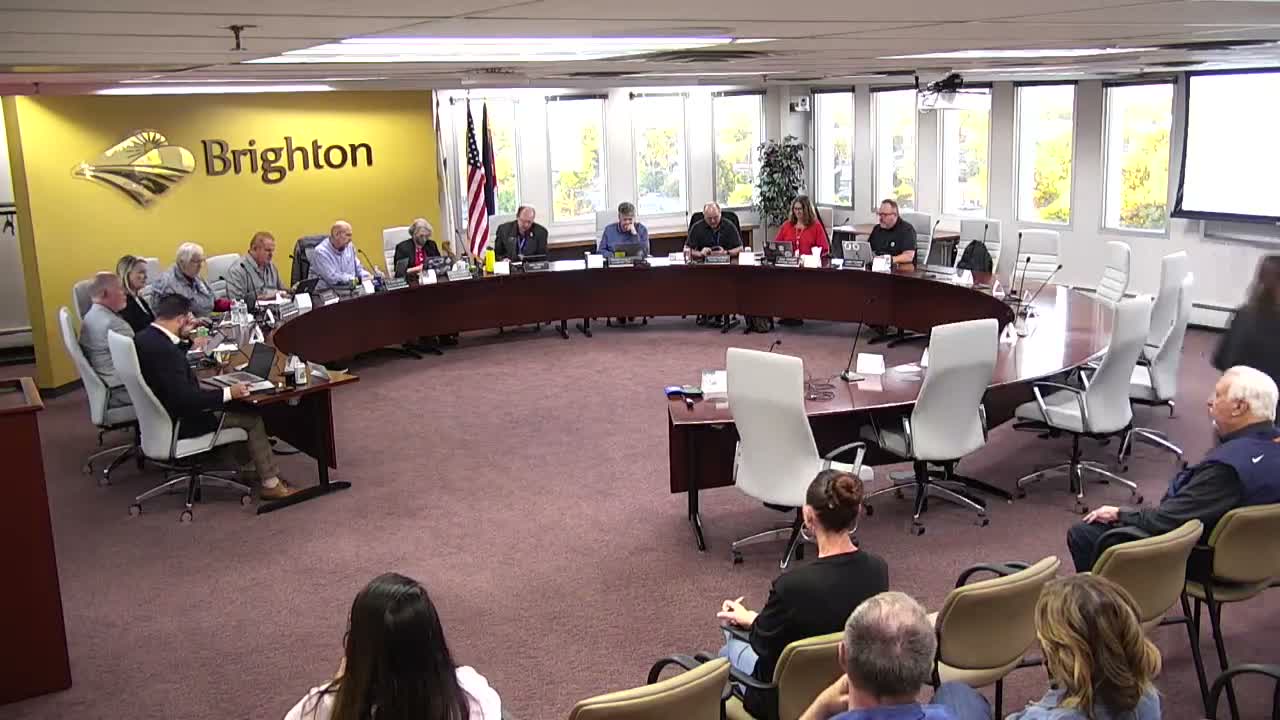
City staff briefed the Brighton City Council on Oct. 14 on strategies to encourage accessory dwelling units, or ADUs, including fee reductions, preapproved designs and right-sizing of impact fees. Consultant Andrew Ratchford said the city could expect modest ADU production if incentives succeed — "maybe we're talking 50 to a 100 or so ADUs over the next 10 years" — and described two common prototypes: a small modular unit and a larger garage-top unit.
The council centered its discussion on the estimated cost of building an ADU. Councilmember Green asked whether the consultant was "seriously saying that a small shed ... would cost $230,000?" Ratchford and staff clarified the figure reflected construction plus permitting, impact fees and other soft costs; staff noted a modular example can be priced around $120,000 but that construction of a single small unit typically costs more per square foot than production homes. Staff said the city can influence only a portion of the total cost and suggested targeted policy levers.
Mayor Pro Tem and other council members urged staff to focus on costs the city controls, including impact fees and plan-review fees. The mayor pro tem recommended exploring an exemption or reduction for ADUs from the city's impact fees, saying ADUs have "proportionally far less impact on public infrastructure" than large new homes. Councilmembers also supported a preapproved plan process, streamlined permitting, and consideration of tying incentives to occupancy or deed restrictions to favor multigenerational or affordable uses.
Staff outlined possible approaches: fee waivers for impact and permitting fees; a preapproved-design program that could reduce architectural and engineering soft costs by an estimated up to $20,000; and a post-closing rebate model tied to a sales-price threshold, similar to a program used in Colorado Springs. Sean Wyman, the city's affordable-housing coordinator, said current ADU permit activity shows many applicants intend ADUs for multigenerational housing and that, without incentives, existing county-wide market forces will limit production.
No formal policy was adopted; staff said it would research specific options, estimate fiscal impacts, and return to council with draft incentives and potential code amendments for further consideration.