Get Full Government Meeting Transcripts, Videos, & Alerts Forever!
Get email alerts on the Land Use topic
No spam. Unsubscribe anytime.
Council broadens landscaping options to allow rock mulch beyond limited zones
Summary
The council voted to adopt a text amendment that gives property owners broader flexibility to use rock mulch in front-yard and parking-lot planters citywide (except where overlays prohibit it), responding to developer requests and questions about maintenance and erosion control.
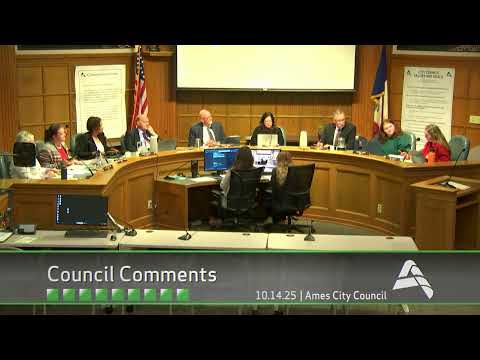
The Ames City Council on Oct. 14 voted to broaden city landscaping standards to permit rock mulch more widely in front-yard and parking-lot planter areas, adopting alternative 2 from staff’s options. Staff presented the issue after the ISU Research Park requested the change because a newly built site experienced erosion that rock mitigated.
Staff told council that the code had previously allowed rock mulch only in limited contexts (foundation planters or areas within campus overlays) and that the request would be a citywide code update to provide more flexibility. The city’s consulting landscape architect told council that organic mulch is typically better for moisture retention and early plant health, but also acknowledged that rock can be appropriate in many contexts and that the soil beneath the mulch is the chief determinant of plant health.
From the business community, an Ames Alliance representative said rock mulch reduces maintenance costs over time and can prevent construction-related erosion. “Rock, though more expensive at the onset, is less expensive to maintain than mulch,” said the Ames Alliance speaker relaying Research Park feedback.
Council discussed carve-outs for University overlay areas (which remain restricted), enforcement to ensure planter beds meet the code’s ground-cover intent, and the need to avoid using rock as a shallow substitute for landscaping. A member moved and the council approved alternative 2, which grants widest discretion to property owners subject to plan review and overlay restrictions.
What happens next: Staff will prepare a text amendment and ordinance language implementing the chosen option, clarify any campus-overlay exceptions already in code, and specify review standards to prevent 'rock-only' minimal landscaping that does not meet coverage intent.