Get Full Government Meeting Transcripts, Videos, & Alerts Forever!
Get email alerts on the Tax Policy topic
No spam. Unsubscribe anytime.
Ames officials warn state levy caps could force cuts or new fees; local funding tools discussed
Summary
Officials at the town budget meeting said proposed state limits on property-tax levies could leave cities unable to meet rising costs, prompting discussion of alternatives including franchise fees, hotel-motel taxes, connection fees, special assessments and reallocation of local option sales tax.
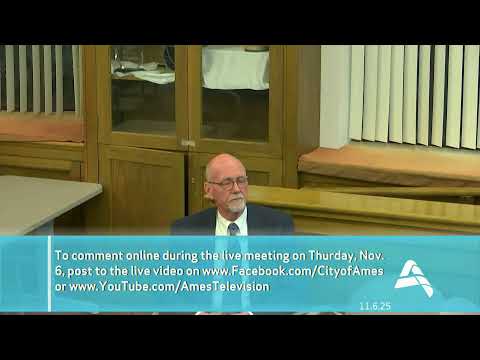
City Manager Steve Shanker warned residents that the state legislature's proposals to limit the general levy could constrain the city's ability to maintain services. "The state legislature is putting clamps on us on what we can collect as far as property taxes," Shanker said, adding that caps would make it hard to fund both existing services and new projects.
Finance staff and council allies discussed alternatives if legislative limits tighten: user fees, franchise fees, hotel-motel tax increases, special assessments for infrastructure, and connection fees for new subdivisions. Staff noted trade-offs: user fees shift costs to direct users, franchise fees could be tacked onto utility bills, and connection-fee waivers as incentives reduce future collections.
Panelists also reviewed the local option sales tax and its ASSET allocation: the transcript said the city's 1'cent sales tax yields roughly $12'$12.5 million annually; by voter decision 60% of that is applied to reduce property taxes and 40% goes to community betterment (human services, parks/recreation, facade programs and other initiatives). Staff cautioned that a hard cap on growth would force the city to prioritize or defer projects and could require shifts in how the city funds services.
Why it matters: a legislative cap on levies would affect the city's flexibility to fund police, fire, parks, libraries and other services and could change how residents are charged for services.
Next steps: officials asked the community to be aware of state-level proposals and, if desired, to support the council in statehouse conversations about allowing municipal flexibility for revenue options.