Get Full Government Meeting Transcripts, Videos, & Alerts Forever!
Get email alerts on the Public Accessibility topic
No spam. Unsubscribe anytime.
Commission weighs broadcasting meetings as ADA captioning and production costs rise
Summary
Staff told commissioners that meeting audio-description and edited closed-captioning requirements will add substantial production hours; staff proposed suspending routine broadcasts and recording selectively for items flagged in advance to manage limited part-time resources and ADA editing demands.
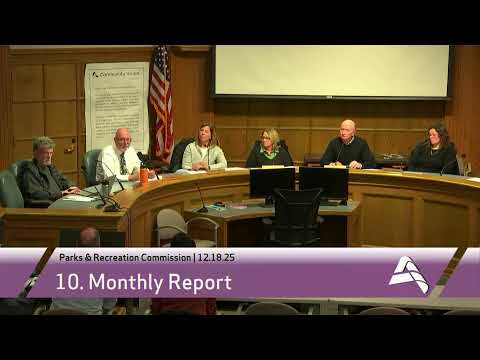
City media staff told the Parks and Recreation Commission Dec. 18 that upcoming ADA requirements (closed captioning and audio-description for archived recordings) would increase production workload substantially. Bill, the city's media production specialist, explained manually edited captions and audio descriptions are required for archived broadcasts and estimated that a typical two-hour commission meeting would take about 11 staff-hours to prepare for public posting; a five-hour council meeting required more than 20 staff-hours.
Staff described viewership for routine commission meetings as low and proposed a policy of recording and preparing broadcasts selectively — for meetings or agenda items identified in advance as likely to attract public interest — rather than maintaining routine live broadcasts for all commission meetings. Commissioners raised accessibility concerns and asked how the city would respond to future pushback if routine broadcasts were discontinued; staff offered to provide data and work with the city manager’s office on resourcing options if community demand warranted expanded coverage.
Media staff also noted that captioning requires human review and editing (AI captions may not suffice for archived materials) and that audio description (text describing on-screen visuals for people who are blind) would add additional time. The commission asked staff to develop criteria for when meetings should be scheduled for broadcast and to provide viewership and cost data to support a final recommendation.