Get Full Government Meeting Transcripts, Videos, & Alerts Forever!
Get email alerts on the Community Engagement topic
No spam. Unsubscribe anytime.
Commission directs staff to continue talks with students on trail 'passport' and Active Ames app
Summary
Two Iowa State student teams presented a printed trail passport and a digital 'Active Ames' fitness app; commissioners expressed concern about long-term continuity and funding but voted to direct staff to continue discussions and explore partnerships, internships and grant opportunities.
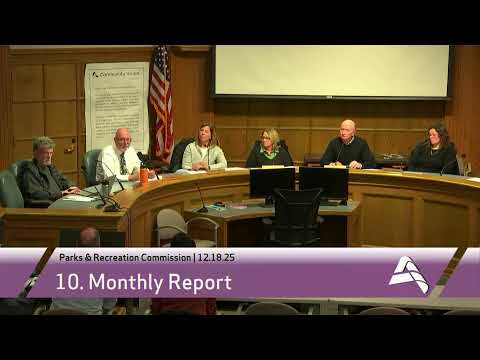
Two student teams from Iowa State University returned to the Ames Parks and Recreation Commission Dec. 18 to answer follow-up questions about two community-fitness proposals: a printed trail 'passport' with stamped hole-punch rewards and a digital 'Active Ames' fitness app and events calendar.
Emma Rios and Catherine Watkins, who presented the trail passport, said the product pairs a color-coded map of Ames parks with a hole-punch passport that rewards users with a collectible patch after visiting six featured trails. They told the commission they plan to apply for SciStarters funding (up to $13,000) and a Focus Artist grant (up to $600) and to seek local distribution through the Ames Public Library and parks facilities.
Leah presented an 'Active Ames' app concept designed to centralize public fitness events and calendars across city and partner organization listings. She described modular student development using internships and program-based work so future cohorts could continue updates, and proposed revenue options including modest paid listings and nonintrusive local advertising to support sustainability.
Commission questions centered on long-term continuity after students graduate, the administrative burden on Parks and Recreation staff, volunteer or faculty sponsorship possibilities, and startup and recurring costs. Students said internship structures through ISU’s science visualization and health management programs could provide continuity and documentation, while volunteers and local partners could assist with maintenance.
Speaker 10 moved to direct staff to continue discussions with both student groups; Speaker 11 seconded the motion and the commission approved it. Staff were directed to meet with the student teams, clarify maintenance and staffing implications, and explore partnerships and funding pathways before returning to the commission with recommended next steps.
The students and staff will coordinate next steps over the winter break, with the commission noting sustainability and documentation as primary factors for future endorsement or formal city involvement.