Get Full Government Meeting Transcripts, Videos, & Alerts Forever!
Get email alerts on the County Assistance Districts topic
No spam. Unsubscribe anytime.
Guadalupe County holds public hearing on possible sales‑tax districts to fund emergency services
Summary
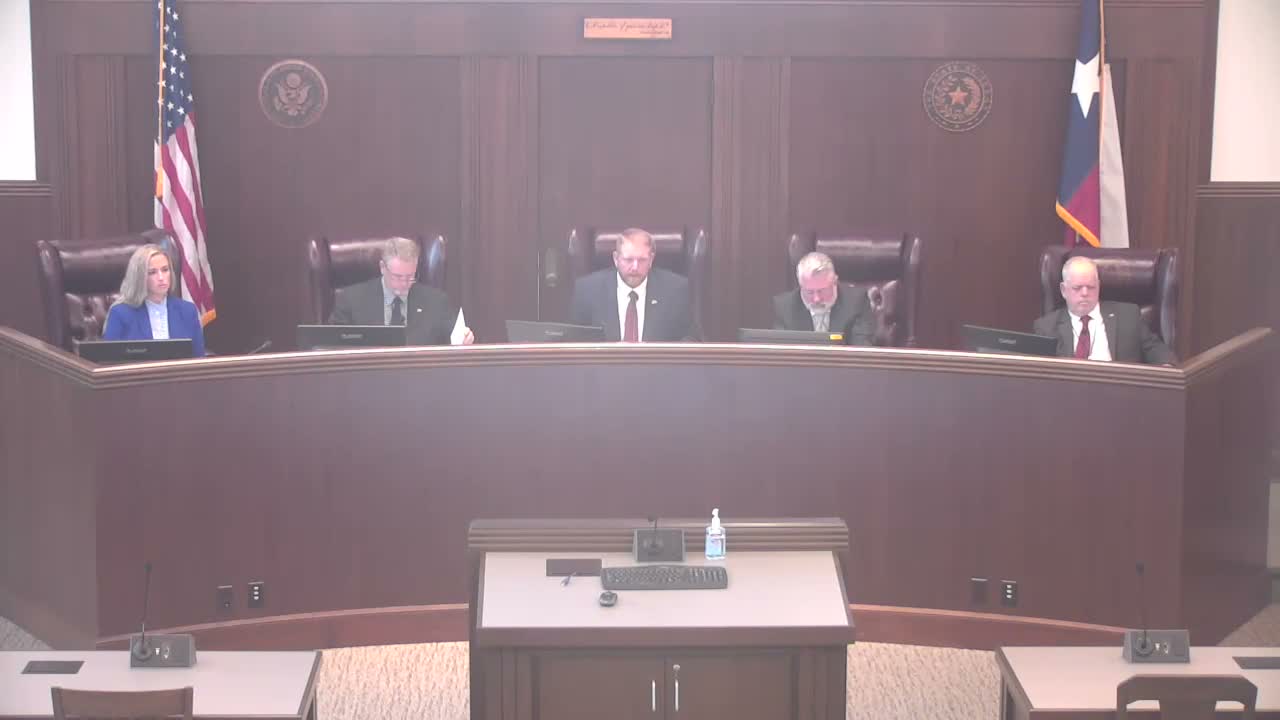
At a public hearing Aug. 5, Guadalupe County commissioners outlined a plan to ask voters whether to create one or more County Assistance Districts — sales‑tax districts intended to raise revenue for services such as fire stations and road work — and invited public input ahead of a second hearing Aug. 12.
Guadalupe County commissioners opened a public hearing Aug. 5 to gather input on calling an election to establish one or more County Assistance Districts (CADs), a mechanism that would allow the county to levy a higher sales tax in specified unincorporated areas to pay for limited, statutorily allowed purposes.
The presiding Judge opened the hearing and staff explained the legal limits: “The state law does not allow commissioner's court to implement an additional sales tax,” a county staff member said, adding that the court’s role is to place a proposed tax measure on the ballot for voters to decide and to identify only the uses the state allows the funds to support. The court emphasized that any CAD election would be decided by county voters, not the commissioners.
A commissioner who spoke in favor of pursuing voter approval said rapid residential growth has left the county needing new revenue sources for emergency services. He noted the high cost of facilities and apparatus — citing a $5 million figure for a fire station and $2 million for equipment as examples — and said CADs are intended to shift costs away from current property taxpayers toward a consumption tax paid in the district.
Several residents asked for details about how a CAD would be structured. Joel Hicks asked whether CADs would be tiered or limited geographically; county staff said a district could be confined to unincorporated areas and eligible ETJs but that including ETJs requires advance notice to affected cities and a city response period under state law. Staff described a 60‑day city notification and a 45‑day response window before an ETJ could be included in a ballot order.
The court and staff described the narrow list of allowable CAD uses, such as law enforcement, road construction, detention facilities, and economic development. Officials also warned of operational constraints from state law and the Local Government Code that limit how counties may assess taxes and direct revenue. On online purchases, staff said point‑of‑sale rules mean shipments delivered to an unincorporated address in a CAD would bear the higher rate unless the purchaser routed the sale through a different jurisdiction.
The hearing closed at 10:45 a.m.; the court scheduled a second public hearing for Aug. 12 and encouraged residents to submit written comments or contact county staff. The court repeatedly said it seeks public input before deciding whether to place a CAD measure on the ballot and that, if placed, voters would determine adoption and specific uses.