Missouri insurance regulators tout record consumer recoveries, seek funds for outreach to close coverage gaps
Summary
The Department of Commerce and Insurance told the House budget committee it recovered $46.2 million for consumers in 2025 and seeks new funding for localized insurance education after finding ZIP-code uninsured rates as high as 73% in some St. Louis areas and up to 90% in certain rural ZIP codes.
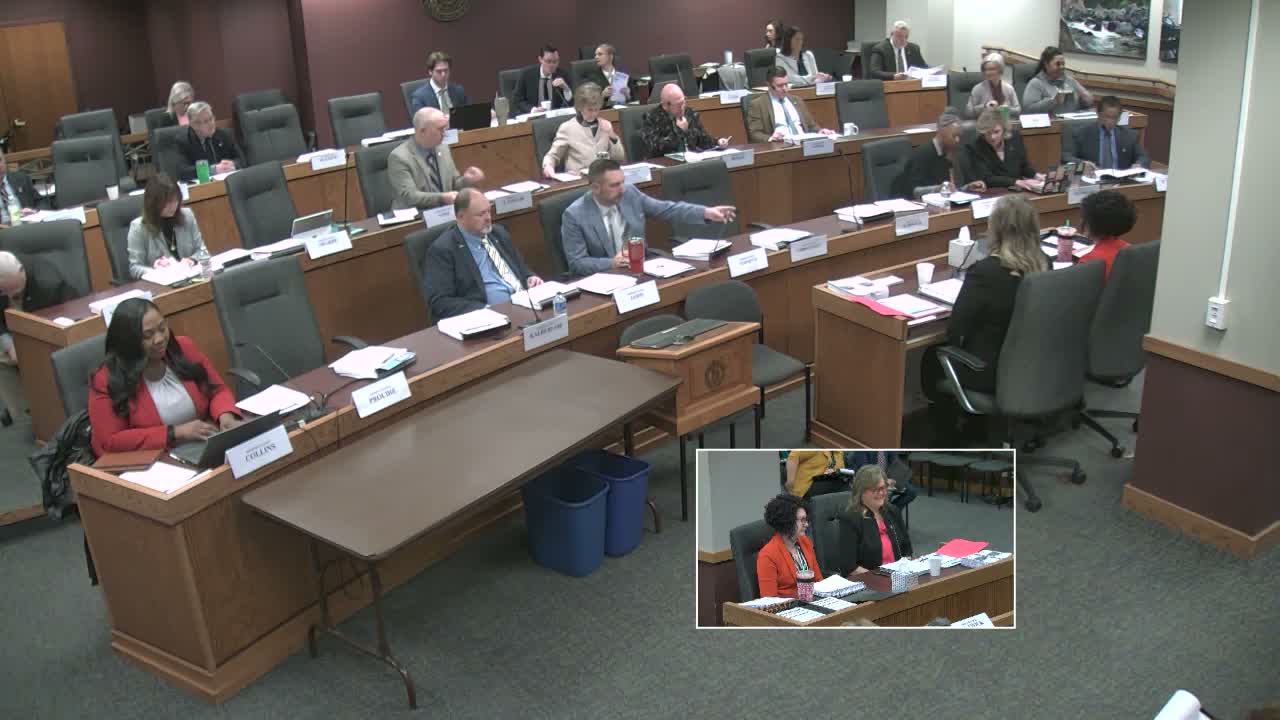
The Missouri Department of Commerce and Insurance told the House budget committee it recovered a record $46,200,000 for consumers in 2025 and is proposing new outreach to narrow large, ZIP-code-level coverage gaps.
“Next week that division will be announcing…we have recovered a record shattering $46,200,000 on behalf of Missouri consumers in 2025,” Director Angela Nelson said, adding the total was roughly double last year’s figure. Nelson and Tanya Henry, the department’s budget director, said DCI’s operating budget is overwhelmingly fee-funded — about 98% non‑general revenue — with only a small share of federal and general-revenue support.
The department asked the committee to approve a new decision item (NDI) to create a dedicated education and outreach team. Henry said the team would partner with trusted local organizations — including city governments, university extension offices and groups such as the NAACP — to explain coverage basics, riders, and claims procedures. That work, department officials said, would focus on communities where data show unusually high uninsured rates.
Nelson told lawmakers DCI staff merged insurer filings with census data to estimate uninsured homeowner rates and found, in some storm-impacted St. Louis ZIP codes, a 73% uninsured rate for homeowners. She said other ZIP codes along the Iowa and Oklahoma state lines showed uninsured rates approaching 90%.
Representative Taylor asked how success would be measured; Nelson said the department will track ZIP-code uninsured rates over time and use those estimates as the program’s primary outcome measure. Multiple members pushed for concrete benchmarks and for the agency to return with more-detailed cost-benefit data.
Lawmakers also probed the limits of the department’s authority. Nelson emphasized the department can examine filings, require insurers to justify rates, and order refunds when examinations find companies mischarged customers. She said her consumer-affairs division aims to close files within 60 days in the department’s “gold standard.”
The department’s presentation did not include a formal vote. Representatives asked for follow-up materials on data sources, the outreach team’s staffing and budget details, and timelines for measuring reduced uninsured rates. Nelson offered to provide additional statistics and implementation plans to the committee.