Sarpy County personnel policy package recommended by Personnel Policy Board; many changes cleared for next step
Loading...
Summary
On May 21, 2025, the Sarpy County Personnel Policy Board recommended approval of a package of revisions to county personnel policies covering separation from county service, solicitation, drug- and alcohol-related policies, cameras and recording, weapons, leave rules, benefits and other employee policies. Most motions passed by a 4-0 roll call with
The Sarpy County Personnel Policy Board on May 21, 2025, recommended approval of revisions to a broad set of county personnel policies, voting to advance changes on topics from separation from county service to DOT drug-testing rules. Jody Riddell, Sarpy County human resources director, presented the package and explained edits and clarifications to individual policies.
The policy package covered separation from county service, a new reasonable-accommodations framework (which was tabled for revision — see separate article), a solicitation and distribution rule, drug-free workplace and non‑DOT and DOT drug-and-alcohol testing policies, a cameras-in-the-workplace policy (revised to strengthen a prohibition on employee audio/video recording on county property), a weapons-in-the-workplace policy, military leave and family/medical leave (FMLA) procedure updates, unpaid-leave rules, workplace injury reporting, group insurance and retirement/deferred compensation explanations, education reimbursement limits, employee assistance program clarifications, alternative worksite arrangements, an employee recognition/resolution timing change (monthly to quarterly), use-of-county-vehicles standards, and the existing employee reference-check policy (no substantive change).
Why it matters: the recommended changes affect job protections, leave rights, testing and safety protocols, privacy rules related to recordings and medical documentation, and benefit entitlements for Sarpy County employees. The Personnel Policy Board’s recommendations move the revisions forward for whatever next administrative or governing-body review is required by county practice.
What the board discussed and decided: Riddell summarized each policy and answered questions about handling of medical documentation, record storage, drug-testing technical cutoffs and prescription handling, alternate-worksite equipment responsibilities, and vehicle driver-screening procedures. On multiple items board members asked for clarity about document storage and employee privacy; Riddell said confidential medical materials would be retained in a confidential medical file rather than a personnel file and that certain document‑handling language from the county’s FMLA policy would be applied where appropriate.
Several specific clarifications recorded during the meeting: - The education-reimbursement policy continues to cover tenured employees for up to one undergraduate course at 90% up to $2,000 and one graduate course at 90% up to $2,500 per fiscal year as the board approved; the board noted those caps may not fully cover current course costs. (Source: Jody Riddell.) - Military leave language was updated to align with federal requirements discussed as the Uniformed Services Employment and Reemployment Rights Act; the policy provides 120 hours of paid military leave and explains benefits and seniority protections. (Source: Jody Riddell.) - The cameras-in-the-workplace policy was revised to strengthen language that prohibits employee audio or video recording on county property where employee or public privacy or confidential county business could be exposed; the policy does not yet specify retention periods for county recordings. (Source: board discussion.) - The use-of-county-vehicles policy retains driver-approval standards administered through the county’s insurance carrier; Riddell said the carrier triggers driving-record checks for employees who drive county vehicles four or more times a year and that the carrier’s standards determine eligibility. (Source: Jody Riddell.) - Non‑DOT testing is a 12-panel laboratory screen with lab cutoffs supplied by the county’s testing vendor; if a lab screen appears positive the medical review officer will work directly with the employee regarding prescription verification. (Source: Jody Riddell.)
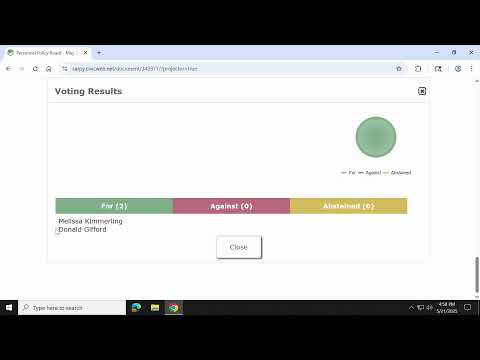
Votes and next steps: For most items the board recorded a 4-0 roll-call recommendation with one member absent; individual motions were presented and seconded by board members during the meeting. The board recommended approval of the revisions as presented (or as amended during discussion) so that the next administrative or governing step can occur per county procedures. One item (reasonable accommodations policy) was tabled so HR could revise HIPAA/medical-document handling language to more closely align with the FMLA policy and to clarify that signing a HIPAA consent is discretionary and only requested when necessary to resolve unclear medical documentation.
Provenance: The package discussion began with the separation-from-county-service item introduced by Jody Riddell at 04:00 p.m. and concluded with the DOT drug and alcohol policy vote at the meeting’s close; transcript segments for the first and last discussions are cited below.
Ending: The Personnel Policy Board’s recommendations carry administrative weight in moving the county’s personnel rules toward final action; HR will make the agreed clarifications (notably on medical-document handling and camera prohibition language) before returning items that the board requested be re-reviewed or proceeding to the next formal step for items that were recommended as presented.