Get Full Government Meeting Transcripts, Videos, & Alerts Forever!
Get email alerts on the Renewable Energy Siting topic
No spam. Unsubscribe anytime.
County adopts new siting standards under state law; reviews Woodside Solar concept near Snow Hill
Summary
Following passage of Senate Bill 931 at the state level, Worcester County on May 20 adopted siting standards for utility‑scale solar and reviewed a 5‑megawatt Woodside Lane solar concept. Planning staff said the state law is more restrictive than current county rules; local officials pressed developers on decommissioning bonds and fire‑safety for
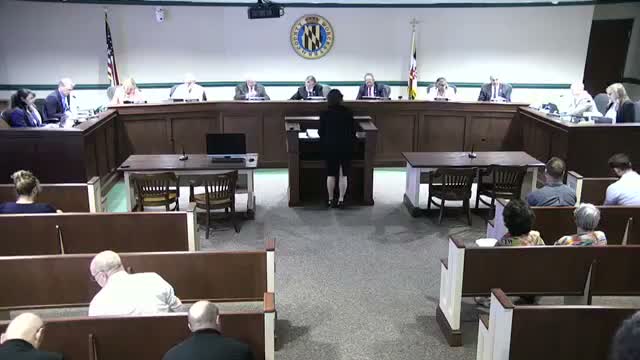
Worcester County Commissioners on May 20 approved new siting standards for utility‑scale solar projects under the changes in Senate Bill 931, and reviewed a concept plan for a 5‑megawatt “Woodside” solar project planned near Snow Hill.
Planning staff told the board the state bill — expected to be signed by the governor — adds setbacks, landscaping and bonding requirements that “are much more restrictive than what Worcester County has on the books right now,” and gives the county clear standards to apply during site review, Planning staff member Jen said. She said projects over 2 megawatts will still be subject to Public Service Commission review but that siting standards will frame the county's comments and modification requests.
The commission voted to adopt the siting standards and to apply them to future county reviews. Commissioner Fiore moved to approve the standards and Commissioner Bertino seconded; commissioners recorded approval.
Developers of the Woodside Lane project, New Leaf Energy, described a 5‑megawatt, single‑axis tracker project on about 23 acres of a 92.6‑acre parcel owned by Jack and Barbara Shockley. “We're targeting about 23 acres of use. 5 megawatt, single access tracker project,” developer Drew Funk said, and showed a concept plan that he said would meet the state setback and screening requirements, avoid identified wetlands and specimen trees, and keep topsoil on site where requested.
Several commissioners and staff used the public review to press developers on decommissioning and long‑term liabilities. Commissioner Bertino asked whether decommissioning bonds would be sufficient if a project failed and the bond did not cover removal and hazardous‑material remediation; staff said decommissioning bonds remain subject to Public Service Commission review and that the state law adds salvage considerations. The developer said the lease contains decommissioning protections and offered to share redacted language with county staff.
Commissioners also raised fire‑safety questions for battery energy storage systems. Planning staff said the state law includes fewer local controls for energy storage and preserves a role for the Public Service Commission to modify local standards, and urged the commission to use the county review to make the fire‑safety case where appropriate.
After discussion the commission found the Woodside concept consistent with county zoning and the new siting standards, authorized staff to prepare a findings letter for the Public Service Commission and directed staff to continue working with applicants on bonding, screening, and decommissioning language.
The county’s action implements the statewide siting rules locally and gives commissioners and planning staff clearer review standards for future solar and battery projects; commissioners said they will continue to press for stronger decommissioning guarantees and clearer fire‑suppression protocols for energy storage in subsequent reviews.