Get Full Government Meeting Transcripts, Videos, & Alerts Forever!
Get email alerts on the Lottery Courier Services topic
No spam. Unsubscribe anytime.
Committee hears competing views on allowing lottery courier services to sell tickets by phone/app
Summary
Proponents told the Ways and Means Committee that authorizing courier services to order official state lottery tickets via app or web would increase sales and reach younger players; retail agents and convenience-store groups warned of cannibalization of brick-and-mortar sales.
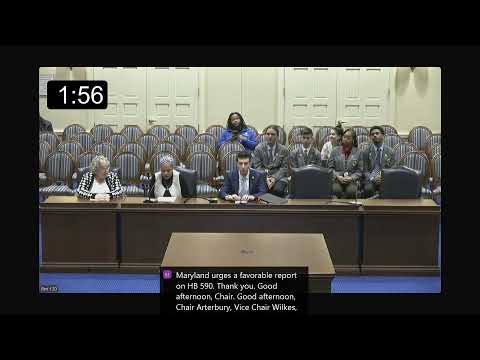
Delegate Eric Ebersole presented House Bill 539, which would authorize licensed third-party “lottery courier” services to accept online or mobile orders for official state lottery tickets that are then purchased in person at a licensed retail location.
Proponents — including representatives of jackpot.com and other courier services — said courier platforms increase convenience, help lotteries reach younger demographics, and produce incremental revenues without cannibalizing existing retail sales. Paul Prezioso, vice president for jackpot.com, described courier services as operating in 19 states and said they ‘‘reach younger demographics and generally attract the attention from adults who are not otherwise playing the lottery.’’ He also said couriers can offer responsible-gaming tools such as deposit limits and self-exclusion.
Bill Frick, testifying for the courier operator, said other states saw material sales increases for draw-based games after allowing couriers and that couriers do not take a share of official ticket payouts; instead they facilitate retail purchase and, in some jurisdictions, operate under retailer licensing regimes.
Retail and convenience-store trade groups, however, strongly opposed the bill. Mike O’Halloran of the Mid-Atlantic Petroleum Distributors Association and Sarah Price of the Maryland Retailers Alliance said courier arrangements risk diverting a significant portion of lottery transactions away from local convenience and grocery stores — outlets that also generate sales tax, fuel taxes and other ancillary revenue. Retailers noted recent commission reductions had already tightened margins and described concerns that courier firms might set up dedicated retail locations (or affiliate with large chains) to process digital orders, taking business from small local agents.
The Maryland Lottery and Gaming Agency provided technical amendments and a proposed regulatory approach; agency staff and proponents signaled a willingness to work on guardrails such as retailer protections, licensing conditions, and limits on exclusivity. Opponents urged an unfavorable report; proponents urged the committee to advance the measure or adopt agency-driven safeguards to protect agents while allowing courier service authorization.
The committee did not record a final vote at the hearing.