Get Full Government Meeting Transcripts, Videos, & Alerts Forever!
Get email alerts on the Tax Policy Reentry topic
No spam. Unsubscribe anytime.
Ways and Means hears bill to create tax reconciliation program for justice-involved individuals
Summary
House Bill 634 would create an income tax reconciliation program administered by the comptroller for people who served six months to ten years in prison, aiming to reduce escalating tax debt that can hinder reintegration.
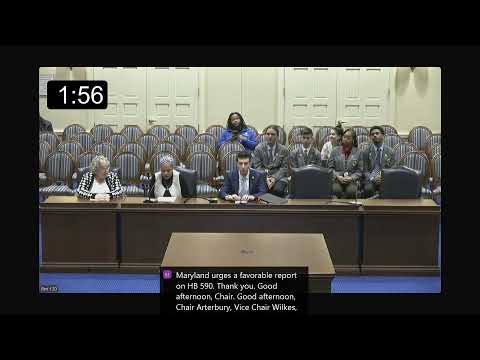
Delegate Edith Patterson (presenting other sponsorship materials) and Delegate Williams introduced House Bill 634 and invited the comptroller and community partners to testify in favor of a program to relieve and reconcile state income tax obligations for certain justice-involved individuals.
“For the record, I'm Brooke Lierman, the comptroller of Maryland. I'm pleased today to testify in support of House Bill 6 34, the Maryland Fair Taxation for Justice Involved Individuals Act,” Comptroller Lierman told the committee, framing the proposal as a way to remove obstacles to reentry and bolster Maryland's workforce.
The bill would create an income tax reconciliation program in the comptroller’s office for people who served prison terms of at least six months and up to 10 years. Supporters said the program would provide relief from tax debts that accrued during incarceration and offer structured payment options on release. Lierman said the comptroller’s office can implement the program with existing resources and cited existing programs — the low-income hardship and offer-in-compromise programs — as complementary.
Advocates described the barriers justice-involved people face upon reentry. Teneya Moore, director of policy at the CASH Campaign of Maryland, said unresolved tax debt adds a hurdle to securing housing and work and that the bill’s provisions — including penalty waivers and structured repayment — would “increase the likelihood of recovering outstanding tax revenues while empowering individuals to rebuild their lives.”
Doctor Carmen Johnson, who identified herself as an impacted person and business owner, testified about returning from incarceration to find extensive unresolved tax and business obligations and urged support for the bill, particularly for professionals and business owners who face distinct reentry challenges.
The comptroller said staff modernization and the new Office of the Taxpayer Advocate would help implement the reconciliation program and that an updated fiscal note in committee packets showed no net effect because the office can absorb the work, using existing systems.
Committee members had an opportunity to ask questions; the hearing ended with proponents urging a favorable report. The record contains no formal committee vote during the hearing.