Get Full Government Meeting Transcripts, Videos, & Alerts Forever!
Get email alerts on the Ranch Rodeo Special Use topic
No spam. Unsubscribe anytime.
Leavenworth County sends ranch-rodeo special-use case back to planning commission after animal-welfare and safety concerns
Summary
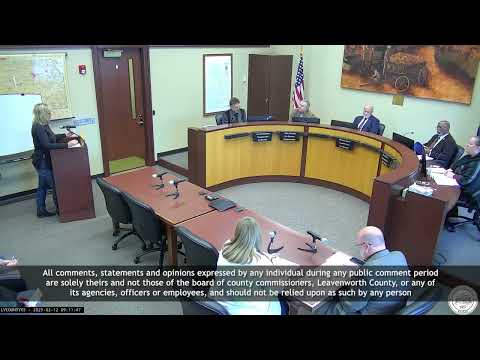
After public comments from veterinarians, neighbors and livestock industry representatives, the Leavenworth County Commission voted to return special-use case DAV24125 for a new public hearing and additional conditions, including prohibition of horse‑tripping and review of bleacher safety and liability coverage.
Leavenworth County commissioners voted to send special‑use case DAV24125 back to the county planning commission for a new public hearing and stricter conditions after a multi‑hour public comment period raised animal‑welfare and public‑safety concerns.
The motion, approved by a 4–1 vote, asks the planning commission to hold a new public hearing and consider measures such as on‑site security paid for by the applicant, a licensed alcohol vendor if alcohol will be sold, certification that Kansas laws will be observed, documentation of out‑of‑state animal registrations where relevant, a prohibition on horse tripping and bull‑tail pulling, stronger liability insurance, an inspection of bleachers, and consideration of an on‑site licensed veterinarian.
Why it matters: The case involves a proposed event site and a planned ranch‑style rodeo. Witnesses and a county veterinarian warned commissioners that certain rodeo events — specifically horse tripping and bull‑tailing — can cause severe injury to animals and, in prior incidents cited by speakers, led to animal deaths. Commissioners said they wanted the planning commission to re‑examine the permit in light of that testimony and other materials received since the original public hearing.
Public testimony and concerns Dr. Joan Bernan, who identified herself as a large‑animal veterinarian and visiting professor, told commissioners she had provided the board with materials from national veterinary organizations and a private compliance study documenting injuries at ranch rodeos. "Horse tripping and bull tailing are considered across the board unethical," she said, and cited national bodies including the American Veterinary Medical Association and USDA APHIS as having raised warnings. She told the board specific incidents in which animals were injured or euthanized during events and urged the county to require farther safeguards or deny the permit.
Thaddeus Prestowicz, who gave his address as 25310 Tonganoxie Road, spoke briefly in favor of fire protection for growing parts of the county but was not a principal participant in the ranch‑rodeo exchange. Other speakers focused on the rodeo: Julie Downs described the events as "vicious" and argued the county should protect animals; Benny Phillips, owner of a livestock market on Linwood Road, defended the event operators and said many in the horse and cattle community take good care of animals used in shows.
County staff advice and legal limits County legal staff and the county counselor advised the commission that material received after the close of the original public hearing — including a letter from the sheriff and additional veterinarian reports — could not be used as the basis for a decision without reopening the hearing. The commission’s motion therefore directs a new public hearing so that the planning commission may receive and consider that material and allow the applicant time to respond.
Commissioners' views Commissioner Steven, who voted against returning the case, said he had visited the property and concluded that the original hearing had been "thorough" and that he had not seen new information sufficient to require a new hearing. "The reason for my no vote is that I was unable to have presented to me what I felt substantiated sending it back," he said. The other commissioners who voted to return the case said they wanted any new information — including the sheriff’s letter and veterinarians’ reports — considered with full due process.
Votes at a glance - Appointment: John Khalil was appointed as Leavenworth County’s alternate trustee on the Kerat board of trustees (motion approved by roll call; vote recorded as unanimous in the meeting record). John Khalil was identified in the meeting as the deputy county counselor and described by staff as eligible to vote because he resides on the Kansas side of the state line. - Special‑use case DAV24125: Motion to return the case to the planning commission for a new public hearing and consideration of specified additional conditions (approved 4–1). The motion asked the planning commission to consider on‑site security paid by the applicant; licensed alcohol vendor requirements and minor‑protection protocols if alcohol is sold; certification that Kansas laws and any required out‑of‑state animal registrations will be complied with; an express prohibition on horse‑tripping and bull‑tail pulling; enhanced liability insurance; bleacher inspection; and consideration of a licensed veterinarian on site.
What happens next The planning commission will schedule a new public hearing on DAV24125 and may recommend conditions back to the county commission. The board indicated it expects additional information to be entered into the hearing record at that time and gave staff direction to ensure the public hearing process complies with due‑process requirements.
Context and background Speakers at the meeting referenced national veterinary organizations — including the American Veterinary Medical Association and the American Association of Equine Practitioners — and federal agencies such as USDA APHIS when describing animal‑welfare standards. Multiple witnesses and a private compliance study cited by presenters described animal injuries and management problems at ranch‑style rodeos in other states. The planning commission had previously conducted a public hearing on the application before forwarding it to the county commission.
In closing, county leaders said they wanted the planning commission to consider both public‑safety features and animal‑welfare safeguards and to hold a hearing that allows the applicant to respond to the recent submissions to the record.