Get Full Government Meeting Transcripts, Videos, & Alerts Forever!
Get email alerts on the Animal Welfare topic
No spam. Unsubscribe anytime.
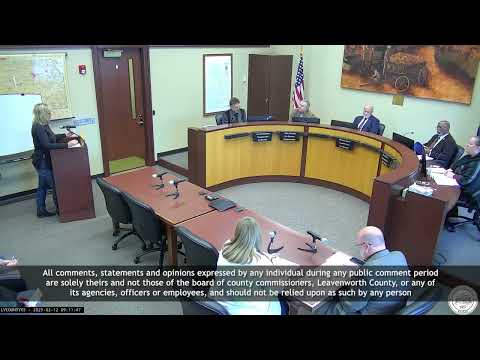
Commissioners send ranch-rodeo special-use application back to planning commission after animal welfare and safety concerns
Summary
After public comment raising animal-welfare and public-safety concerns, the Leavenworth County Board of Commissioners voted 4-1 to return special-use case DAV24125 for a new public hearing and additional conditions including a ban on horse tripping and a requirement for a licensed veterinarian on site.
Leavenworth County commissioners voted to send special-use application DAV24125 back to the county planning commission for another public hearing and for consideration of new conditions after residents and a large-animal veterinarian raised animal-welfare and public-safety concerns.
Dr. Joan Bernain, a large-animal veterinarian who identified herself as a resident and said she has worked in the industry for decades, told commissioners she reviewed videos and a citizen compliance study and urged the county to prohibit specific rodeo events she described as abusive. "Horse tripping and bull tailing are considered across the board unethical, illegal in most states, and abuse of animals," Dr. Bernain said. "You don't put ropes around horse's legs, period." She warned commissioners that some states that had allowed similar events subsequently passed laws banning them after injuries and deaths.
Other public commenters described safety and nuisance risks. Julie Downs said animals and people "come out with their legs broken, their tails, their spines contorted." A former county commissioner who spoke as a resident said he was concerned that large nearby investments and employers would be harmed if the county drew negative attention. Benny Phillips, owner of a local livestock market, told the board that the participants he knows care for their animals and urged the county to consider the cultural context of the event.
At the public-meeting portion of the hearing the board discussed what material could be considered in their decision. County legal counsel reminded commissioners that the record for today's decision must be based on evidence admitted at the earlier public hearing and that new submissions such as the sheriff's letter would require a new hearing so the applicant has an opportunity to respond.
Commissioner Steven moved to send the case back to the planning commission and to request a new public hearing; the motion listed multiple items for the planning commission to evaluate, including certification of on-site security paid by the applicant; a licensed vendor if alcohol will be sold and controls to prevent sale to minors; certification that Kansas laws and applicable registrations or licenses for animals will be observed; explicit prohibition of horse tripping and bull tailing; review and possible enhancement of liability insurance; inspection of bleachers; and consideration of a licensed veterinarian on site. The board added the licensed-veterinarian requirement to the motion before the vote.
The motion passed 4-1. One commissioner said he had visited the property and neighbors and voted no because he did not feel new, substantive evidence had been presented that would change the outcome.
Votes at a glance: • Resolution 25-6 (Case DAV24125) — Motion to return the case to the planning commission for a new public hearing and consideration of additional conditions including prohibition of horse tripping and requirement for licensed veterinarian on site: passed 4-1. • Appointment of John Khalil as Leavenworth County alternate trustee on the Kerat ("Carrot") Board of Trustees: approved (unanimous roll call). • Consent agenda: approved (unanimous roll call).
The planning commission will schedule the new public hearing and may consider additional evidence and testimony; the board did not set a date. Commissioners and staff said the new hearing will allow the applicant to respond to any new submissions and satisfy the county's quasi-judicial due-process requirements.