Get Full Government Meeting Transcripts, Videos, & Alerts Forever!
Get email alerts on the Development Bond Reduction topic
No spam. Unsubscribe anytime.
Council ties on Shoreline Properties bond reduction after residents raise dust, safety concerns
Summary
The West Warwick Town Council was unable to approve a partial release of a developer improvement bond for the Shoreline Properties subdivision after a 2-2 tie. Council members and neighbors debated whether the town should hold $438,800 — the amount town engineers say is needed to finish remaining public improvements — or keep a larger reserve, and—
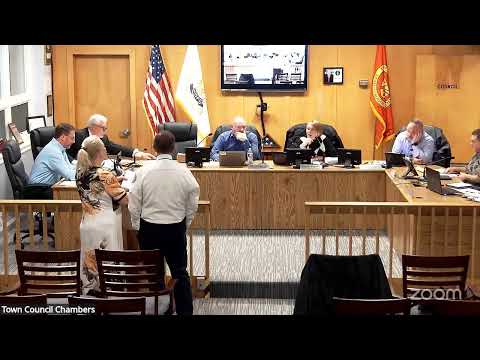
The West Warwick Town Council on Feb. 4 failed to approve a planning-board-recommended partial release of an improvement bond for the Shoreline Properties subdivision after a 2-2 tie vote, leaving the full existing guarantee in place for now.
The motion sought to reduce the original guarantee of about $1,030,100 to $438,800, the sum the town engineer, public works director and Kent County Water Authority estimated would be needed to finish remaining public improvements (sewers, road top coat, sidewalks and landscaping). Planning staff recommended the $438,800 figure. Council members who opposed the reduction cited unresolved neighborhood complaints about dust, debris on local streets and public-safety concerns; supporters said state law and the planning board’s professional estimates limit the town’s ability to withhold more than what is needed to complete the work.
Why it matters: An improvement bond is intended to guarantee that a developer completes required public infrastructure. Council members said earlier versions of the town’s rules let developers choose the bonding method and led, in some cases, to partially finished projects. The planning board, the town solicitor said, now sets the type and amount of the guarantee and the council acts on requests for reductions based on experts’ estimates.
What was discussed: Councilman (name on record: referred to in the meeting as the local council member for the area) described repeated complaints from neighbors near the project: unmowed lots with grass as high as about 3 feet; a 2023 incident that drew the fire department and bomb squad because fireworks were to be lit on the property; persistent dust that neighbors described as like “a desert” blowing across yards; and chunks of dirt left on public streets that made walking and biking hazardous. He said a water tank (a “water buffalo”) had been brought in but used only sparingly and that dust control had not been sustained.
The town solicitor and planning-board proponents explained the statutory framework. Under the method the developer chose, experts evaluated what it would cost to finish the project; those experts produced a total professional estimate of roughly $438,800 (sewer $284,000; public works items $146,800; Kent County Water Authority $8,000). The solicitor told the council that the town’s regulations and state law limit the town to retaining only what’s needed to complete the improvements, and the planning board’s recommendation must be given effect.
Town staff and the town engineer said part of the work remaining includes the top coat of asphalt, sidewalks and landscaping; not all houses are completed on site. A town engineer’s representative said the office used unit pricing (current prices for asphalt, concrete, square footage measurements) provided by the developer and from on-site inspection to compute the cost estimates.
Public comment: Two developers’ principals and neighborhood residents spoke. Developer representatives questioned why the council rejected the planning-board recommendation and raised whether council conflicts or recusals were handled properly; a neighborhood resident reiterated dust and debris concerns and asked the council to consider enforcement avenues beyond bonding.
Outcome: The motion to reduce the bond by the recommended $591,300 (a reduction from $1,030,100 to $438,800) resulted in a 2-2 tie and did not pass. The record shows at least one council member absent for the vote. Because a majority is required to reduce the bond, the reduction was not approved and the existing guarantee remains in effect.
Next steps: Council members and staff said separate enforcement channels — building-inspection violations or other department enforcement — could address some neighborhood complaints in parallel. The planning board’s estimate and the developer’s right to appeal remain part of the administrative record.