Get Full Government Meeting Transcripts, Videos, & Alerts Forever!
Get email alerts on the Public Health Budget topic
No spam. Unsubscribe anytime.
Columbus Public Health proposes $44.7 million budget, cites workforce and program pressures
Summary
Health Commissioner Mashika Roberts told council the department’s proposed 2025 budget is $44,718,674, emphasizing workforce diversity, grants that fund much of operations, and continuing investments in clinical, environmental and violence‑prevention programs.
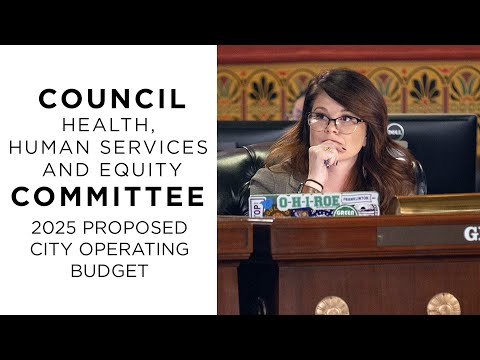
Columbus Public Health presented a $44,718,674 operating budget proposal for 2025 to the Council Health, Human Services & Equity Committee, with Commissioner Mashika Roberts outlining staffing, revenue sources and program priorities.
Roberts said the budget includes “just under $35,000,000 for personnel costs,” covering about 325 full‑time and 20 part‑time staff paid in part from grants. She described a net reduction of six FTEs compared with the department’s internal 2024 figure and emphasized the department’s racial diversity among staff.
Why it matters: Roberts warned that potential state and federal budget changes are an ongoing risk and said Columbus Public Health has planned contingencies and seeks diversified revenue through grants. She described the department’s role in disease investigations, clinical services, environmental health and violence‑prevention work.
Program highlights and funding details: Roberts identified several line items in the proposed budget: - Clinical health funding: roughly $4,900,000 to support vaccinations, women’s health, STI testing and TB care and to contract with federally qualified health centers; by 2027 the primary care allocation will be dispersed based on clients served by FQHCs then operating. - Environmental health: about $7,500,000 to support food, water, vector and other hazard prevention work with 67 employees. - Neighborhood social services: more than $5,200,000 for 42 full‑time staff linking residents to trauma supports; mobile crisis and right‑response teams provide social workers who assist 911 and police mental‑health calls. - Addiction services and harm reduction: a city operating budget of $1,700,000 and 10 full‑time employees; SafePoint harm‑reduction funding was noted by other speakers as a city‑funded program. - Workforce incentives: an increase of about $1,800,000 for bilingual pay, tuition reimbursement and hiring at market competitive rates to recruit and retain public health staff.
Roberts noted a $9,000,000 CDC grant that is in year three and supports hiring, and she said other grant funds underwrite more than 220 employees and roughly $31,000,000 in program costs.
Council follow‑up and concerns: Chair Green and other members pressed Roberts on vulnerabilities if state or federal funds are reduced and on how opioid settlement dollars are being used. Roberts said opioid settlement funds currently in hand are being used to hire two FTEs for the Columbus & Franklin County Addiction Plan, to fund a Latino outreach mental‑health program and to temporarily fund a home‑visiting maternal behavioral health program called Hope at Home; she cautioned the city does not yet know the timing or full size of future settlement receipts.
Ending: Roberts asked for council’s continued partnership to maintain public‑health services if external funding changes, and she offered to respond to more detailed budget questions as the council’s process advances.