Get Full Government Meeting Transcripts, Videos, & Alerts Forever!
Get email alerts on the Rezoning topic
No spam. Unsubscribe anytime.
Committee advances Tramway Center PUD to preserve nonprofit space and allow 63‑unit affordable housing
Summary
CPD and the Urban Land Conservancy presented a PUD to conserve the historic Tramway nonprofit building, bring existing nonprofit uses into compliance and build a four‑story, 63‑unit affordable housing development on a vacant pad. The committee voted to forward the PUD to the council floor amid neighbor concerns about height, parking and density.
The Community Planning and Housing Committee voted to forward a Planned Unit Development (PUD) request on the Tramway nonprofit center block in the Cole neighborhood to the City Council after an in‑depth presentation and extensive questions from councilmembers and neighbors.
Edson, a CPD planner, described the application as PUDG 38. The request would convert the site from former chapter 59 zoning to a PUD that explicitly conserves the Tramway (Motor Coach Division) building, allows continued nonprofit uses and permits a four‑story (up to 45 feet) affordable housing building of roughly 63 units on a vacant portion of the block. CPD noted the project has an affordable housing plan signed with HOST and won low‑income housing tax credits (LIHTC) in November 2025.
Andrea Burns of Urban Land Conservancy (ULC), the applicant, said the rezoning is intended to retain long‑standing nonprofit tenants and deliver permanently affordable housing. Burns and ULC representatives explained why retaining four‑story entitlement on the development pad was necessary to be competitive for tax credits and the LIHTC program’s underwriting. ULC CFO Brad Dodson told the committee LIHTC awards carry an 18‑month timeline to break ground and that about two months of that window have elapsed.
Neighbors and mediation participants raised repeated concerns about height, density, parking and neighborhood character. Katie Hannah, who participated in mediation, said mediation addressed those concerns but ended without agreement: “the biggest concerns were sort of the height, the scale, or the density of the number of apartments… and the parking impacts… we were all at a point where we knew the main concerns... were not able to be resolved.”
CPD said it received letters both supporting and opposing the PUD (including support from historic and affordable housing organizations and opposition letters raising parking and height issues; one opposition packet contained some names later flagged as possibly misattributed). CPD recommended approval based on consistency with adopted plans, an equity analysis, and the applicant’s commitments, including a voluntary affordable housing covenant and conservation requirements for the Tramway building (PUD section 4.5). The PUD would require conservation measures making voluntary demolition difficult and would permit limited changes only under the PUD terms.
Councilmembers probed alternatives, why the PUD was necessary rather than a base zoning district, the mediation process and whether 3 stories would be feasible. ULC and CPD said they explored base zone districts but concluded a PUD was the most practicable route to conserve the historic structure, allow surface parking for the nonprofit and secure LIHTC financing for four stories on the vacant pad. CPD said the planning board unanimously recommended approval.
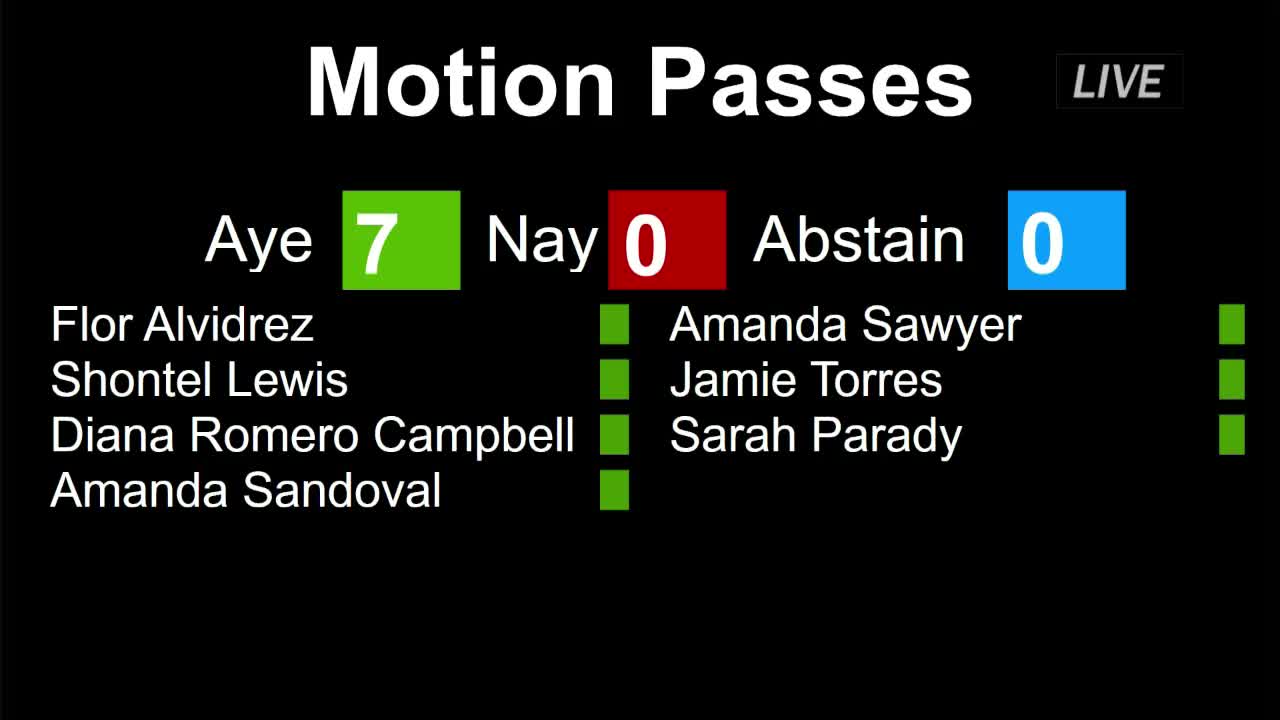
The committee moved and seconded the application and forwarded the PUD to the council floor by voice vote. Committee members asked CPD to share detailed zoning analyses and the mediation report with council offices. The PUD will next proceed to a council public hearing and any subsequent review required by council.