Lifetime Citizen Portal Access — AI Briefings, Alerts & Unlimited Follows
Senate committee advances bill to create licensure pathway for internationally trained physicians
Loading...
Summary
The Senate Health and Human Services Finance and Policy Committee passed Senate File 509 as amended, creating a pathway for experienced internationally trained physicians to obtain Minnesota licenses without repeating full U.S. residency; the bill was referred to the Committee on State Government.
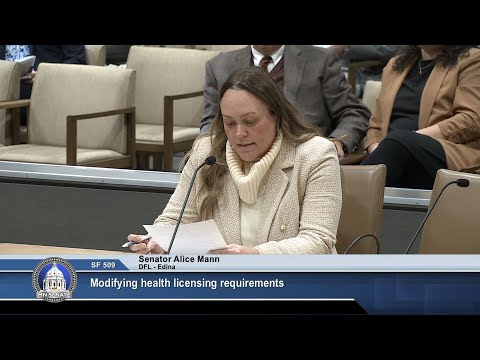
Senate Health and Human Services Finance and Policy Committee on Tuesday passed Senate File 509, a bill that replaces Minnesota's residency requirement for some internationally trained physicians with a supervised-practice pathway and other safeguards, and referred the measure to the Committee on State Government.
Senator Mann, the bill author, told the committee that under current rules physicians trained abroad who already practiced for years must complete U.S. residency training "all over again," and that shortage of residency slots prevents many qualified doctors from practicing in Minnesota. "It is estimated that there is about 220 to 300 doctors who are ready to practice medicine in Minnesota but can't because of the current requirements," Senator Mann said.
The bill as amended removes the automatic requirement that all internationally trained physicians repeat a full U.S. residency and instead establishes conditions for eligibility. Those conditions, described at the hearing, include graduation from medical school, passage of the three USMLE step exams, at least five years of clinical practice in the previous 12 years, two years of supervised practice in a rural or underserved Minnesota location, multiple letters of recommendation and periodic competency checks, and documentation comparable to resident competency records. If the requirements are met the physician would be eligible for a Minnesota license.
Supporters said the proposal would expand the available clinician workforce, diversify the pool of providers and free residency spots for U.S. graduates. Azar Maloki, a dermatologist who trained in Iraq and later passed U.S. licensing exams, described years spent preparing for residency attempts and the financial strain of exam and application costs. "If this bill had been in place years ago, it would have made a significant difference in my life and my family's life," Maloki testified.
Mike Zimmer of World Education Services, which advises states on credentialing pathways, told the committee that numerous states have adopted similar pathway legislation and that Senate File 509 "includes important provisions to safeguard the health and safety of the public" by requiring USMLE passage and board oversight. Several physicians who trained abroad gave personal testimony in support of the bill, including an ophthalmologist and other specialists who recounted long licensing timelines despite prior training and experience.
Committee discussion noted that sponsors had spent the past year consulting stakeholders. Senator Abler asked whether anyone opposed the measure; Senator Mann said there were no letters of opposition after stakeholder discussions. The committee adopted the author's amendment (listed in the record as the 82 amendment) by voice vote and then voted to recommend passage as amended and referral to the Committee on State Government. The motion carried on the committee's voice vote; the record shows members responding "Aye" and no recorded "no" votes.
The committee also discussed procedural next steps: staff advised the bill needs to go to State Government because the bill includes an authorization for the Commissioner of Health to issue corrective orders as described in section 1 of the measure. Senators who spoke in favor stressed workforce shortages and rural needs; several members said they supported the bill with the condition of continued stakeholder engagement as it moves through the process.
Votes at a glance: The committee adopted the 82 amendment (Senator Mann moved; amendment recorded as adopted) and then recommended Senate File 509 as amended be passed and referred to the Committee on State Government. The committee recorded a voice vote with members saying "Aye" and no recorded opposition.
Provincial note: The bill record indicates referral to State Government; detailed rulemaking, education or implementation timelines will depend on language in the enacted statute and subsequent administrative rules.
Ending: Senate File 509 now moves to the Committee on State Government where further consideration, and any additional amendments or implementation language, will be determined.