Get Full Government Meeting Transcripts, Videos, & Alerts Forever!
Get email alerts on the Homelessness topic
No spam. Unsubscribe anytime.
Placer County staff outline homeless services spending and ask board to negotiate shelter contract changes
Summary
County Health & Human Services presented an overview of homeless programs funded by county, state and federal sources and recommended negotiating amendments to Mid Placer shelter contracts; board directed staff to open negotiations and continue regional work after public comment on vendor transparency and shelter siting.
Placer County Health & Human Services on Tuesday gave the Board of Supervisors a detailed briefing of county, state and federal spending on homelessness, and supervisors directed staff to begin contract negotiations to revise programming and admission rules at the county-supported Mid Placer shelters.
The presentation, led by Jeff Merriman of the County Executive Office and Dr. Rob Oldham, director of Health & Human Services, summarized roughly $5.7 million in county general fund support for outreach, emergency shelter and managed encampment services and roughly $12.9 million in state and federal programs that serve people who are homeless or at risk of homelessness. Merriman told the board the county’s goal is to prioritize permanent supportive housing and better connect services so fewer people stay in congregate shelters long-term.
HHS described the county’s Homeless Liaison Team (a combined sheriff, probation and HHS team) and shelter outcomes. Dr. Oldham said permanent supportive housing shows the best long-term results while emergency shelters and managed encampments help with immediate safety and public-health concerns but have lower housing-retention rates. “Permanent supportive housing delivers better long-term outcomes than emergency shelter,” Dr. Oldham said.
The county highlighted prevention programs that reach far more people than the nightly point-in-time count, including rental assistance and short-term aid for families through CalWORKs and related state-funded programs. HHS also described ongoing coordination with Medi-Cal managed care for intensive case management and the shifting sources of medical-respite funding.
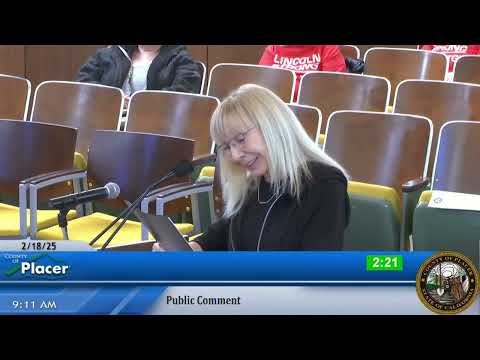
Public comment at the board meeting focused heavily on the county’s contracting with The Gathering Inn (TGI) and questions about a private nonprofit’s proposed respite facility in Lincoln. Multiple residents urged an independent audit and greater transparency around contract performance and grant applications; Nellie Collins, a Lincoln resident, said, “We deserve to have full transparency of how homelessness is being managed by the county and how our tax dollars are spent.” TGI staff and volunteers, including Nick Golling, TGI’s chief program officer, addressed the board and described services, outcomes and private fundraising that supplemented county and state funding.
After staff recommendations and discussion, the board voted to direct staff to begin negotiations with the current Mid Placer shelter provider to amend shelter admission and exit criteria and program requirements, and to continue participating in regional planning to identify additional shelter and permanent-supportive housing options. The motion to initiate negotiations was made by Supervisor Gustafson, seconded by Supervisor DeMatte, and carried by the board. The board separately approved staff participation in continued regional homelessness coordination.
County staff said the initiatives will include consideration of residency criteria, length-of-stay standards and pay-for-performance elements in future contracts. HHS also said it will return with more detailed cost and outcome data and recommended procurement approaches for future permanent-supportive housing development.
Ending: The board’s direction starts formal talks with the current shelter contractor and asks staff to continue regional coordination and to return with more detail on contract performance measures, budgets and siting criteria for future housing investments.