Get Full Government Meeting Transcripts, Videos, & Alerts Forever!
Get email alerts on the Workplace Safety Public Sector topic
No spam. Unsubscribe anytime.
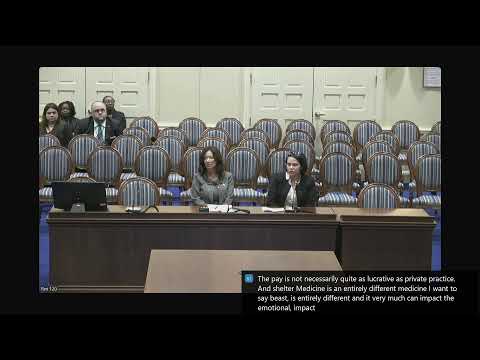
House committee hears bill named for slain agent that would apply workplace-safety penalties to public employers
Summary
Lawmakers and unions urged the House Appropriations Committee to support the Davis Martinez Public Employee Safety and Health Act, which would require Maryland occupational-safety enforcement of public employers, add a workplace-violence standard and allow penalties for violations currently exempted for public bodies.
Delegate Jared Solomon introduced the Davis Martinez Public Employee Safety and Health Act on behalf of families and unions, saying the bill is intended to “make sure that none of our public servants ever have to wonder whether they're coming back at night.” The measure would require the Maryland Department of Labor's safety office (MOSH) to develop a workplace-violence prevention standard for public employers, create a dedicated unit to focus on public employee safety and remove the longstanding exemption that prevents many public bodies from facing fines for safety violations.
Supporters — including AFSCME, the Maryland State Education Association, the Maryland State Firefighters Association, and local unions — told the Appropriations Committee the bill responds to recent deaths and citations. Reneka Robinson, president of ASKME Local 3661, said in testimony that “Agent Martinez was murdered while conducting a routine home visit,” and that unions had warned the employer of safety risks. Bill Chenoweth, a safety officer in Howard County, described incidents in which reports were not properly handled and said the absence of penalties “fosters a system that promotes indifference and neglect to public employee safety.”
Witnesses described multiple recent on-the-job fatalities affecting public employees in Maryland and urged parity with private-sector enforcement. Jordan Barab, who formerly led federal OSHA's program at the U.S. Department of Labor, said penalties are “reasonable” and serve to incentivize compliance; he noted average federal OSHA penalties are much lower than the statutory maximums. AFSCME President Patrick Moran and other union leaders urged the committee to allow penalties to create financial incentives for public employers to correct hazards, pointing to citations at the Patapsco wastewater plant and other sites where MOSH recommended penalties of zero.
Delegates and county and municipal groups said they are working on technical amendments. The Maryland Association of Counties and Maryland Municipal League said they generally support the bill's intent but asked for changes on notice procedures for employees who lack email and on other operational details. The Department of Labor said MOSH already covers nearly all Maryland workers and that it stands ready to work with stakeholders on standards and implementation.
Opponents initially raised concerns about attorney‑client conflicts when the Attorney General represents both a cited agency and the agency that enforces citations; Solomon said that conflict already exists and the AG's office navigates it today. Committee members asked about potential spikes in appeals and how penalties would be handled; witnesses said agencies already contest citations in current practice.
No formal vote was recorded in the hearing. Proponents said the bill is the next step to require public employers to meet the same expectations as private employers for worker safety and to establish a uniform workplace-violence standard for public employees across Maryland.
Ending: The committee closed the bill hearing with a pledge to move the legislation forward and to continue negotiating technical amendments with counties, municipalities and the Department of Labor.