Get Full Government Meeting Transcripts, Videos, & Alerts Forever!
Get email alerts on the Local Tax Levy topic
No spam. Unsubscribe anytime.
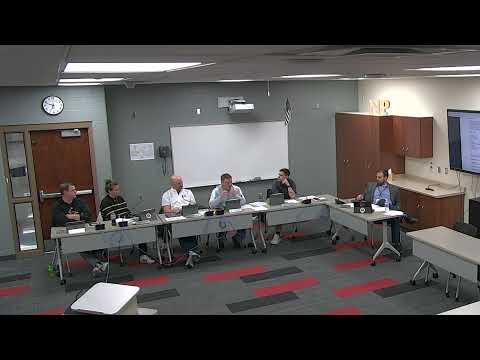
Superintendent: physical‑plant levy set to sunset in 2026; district to hold informational session ahead of March 4 ballot
Summary
Superintendent Michael Klein outlined the district’s upcoming physical plant and equipment levy (PEPL) renewal on the March 4 ballot and scheduled a public information session. Board members discussed state supplemental student aid (SSA) proposals and the gap between projected inflationary costs and proposed state funding increases.
Superintendent Michael Klein told the board that North Polk Community School District’s voter‑approved physical plant and equipment levy (PEPL) is scheduled to sunset June 30, 2026. The levy was authorized for 10 years and the district currently levies $1.34 (one dollar and thirty‑four cents) per whatever taxable unit is applied under the district’s levy authority.
Klein urged community members to note that on March 4 voters will be asked whether to continue the $1.34 PEPL levy to fund infrastructure needs: buses, technology, security and other capital and equipment needs. He said the district will host an informational session in the high school Collaboration Center on Monday, Feb. 24, from 5:30 to 7 p.m.; the session will include a brief presentation at 5:30 p.m. followed by a question period.
Klein linked the conversation to broader funding pressures. Board member Keith Borman explained how state supplemental student aid (SSA) proposals translate to district dollars: a 2 percent increase in SSA (based on a per‑student base of $7,826) would add about $335,000 to North Polk’s FY26 general fund budget, while a 3.5 percent increase would yield approximately $587,000. Borman said those amounts would largely be consumed by inflationary cost increases the district faces — for example, an 11.3 percent rise in health insurance and about a $60,000 projected increase in property insurance — leaving little new discretionary funding.
“Every new teacher that we would potentially hire … has impact, longstanding impact on what is our solvency ratio,” Borman said, summarizing the district’s need to balance growth‑driven staffing demands with operating costs.
Board members encouraged community engagement with state legislators on school funding. Klein also reminded families of near‑term district events such as family‑teacher conferences and winter activities; he congratulated students recognized by the Iowa High School Speech Association.
Ending: The board scheduled an informational session Feb. 24 and encouraged voters to review PEPL materials ahead of the March 4 ballot. The district will continue to monitor state funding proposals and incorporate final SSA figures into FY26 budget planning.