Get Full Government Meeting Transcripts, Videos, & Alerts Forever!
Get email alerts on the Ethics Enforcement topic
No spam. Unsubscribe anytime.
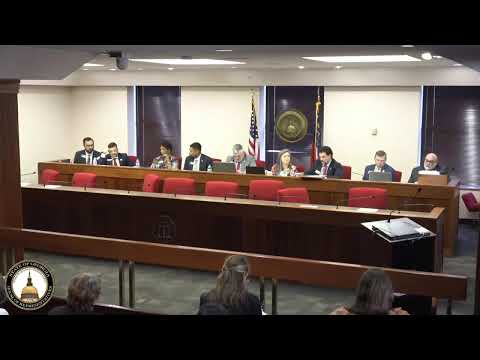
Subcommittee reviews bill to let Georgia Ethics Commission seek records from nonresidents
Summary
A Georgia House subcommittee heard House Bill 414, which would allow the Georgia Government Transparency and Campaign Finance Commission (ethics commission) to use superior court orders to obtain information from nonresidents and out‑of‑state vendors involved in Georgia elections. Lawmakers discussed definitions, due‑process safeguards and venue; a
Chairman Jones presented House Bill 414 to the Governmental Affairs subcommittee, saying the measure would give the Georgia Ethics Commission the ability to pursue nonresidents when investigating election‑related activity. “Essentially, what this is is not an expansion of the ethics commission’s authority, but rather equal application of such authority,” Chairman Jones said.
The bill would add a statutory definition for “nonresident” (referencing Code section 9‑10‑90) and authorize the ethics commission to request information from those individuals or entities located outside Georgia. If the nonresident declines to comply, the commission could seek an order from superior court compelling production; the bill specifies Fulton County as proper venue for such actions.
Executive Director David Amati of the Georgia Ethics Commission told the committee that the proposal responds to a longstanding enforcement gap when vendors or consultants operate from outside Georgia. “What we’ve seen, over the years, is groups that want to run dark‑money ads attacking someone might step out of state to hire a vendor to do all of that activity and then mail it in, flood it into the state in that district,” Amati said. He described the bill as providing a judicial mechanism to obtain records the commission needs for investigations.
Committee members asked for clarifications about scope and whether the authority would reach national parties; Amati said any organization engaging in electioneering activity in Georgia would be subject to jurisdiction. The presenter and the commission emphasized the bill includes due‑process protections: a superior court must find the requested materials are “pertinent or necessary” to the investigation before enforcing an out‑of‑state subpoena.
Committee members also noted a one‑word typographical fix and the presenter said he would offer a corrective amendment. The subcommittee held the measure as a hearing only and agreed to allow a committee substitute to be filed and considered in full committee the following day rather than vote on final action at the subcommittee meeting.
The bill’s text as discussed pointed lawmakers to Code section 9‑10‑90 for the nonresident definition and to existing subpoena and long‑arm case law for due‑process procedures. No committee vote was taken; the chair said the bill will be introduced as a substitute and returned for further committee questioning in full committee.
Votes at a glance: no formal vote recorded in subcommittee; hearing only, committee substitute to be filed for full committee consideration.