Get Full Government Meeting Transcripts, Videos, & Alerts Forever!
Get email alerts on the Trade Names Registration topic
No spam. Unsubscribe anytime.
Committee approves bill to centralize Georgia trade-name registrations online
Summary
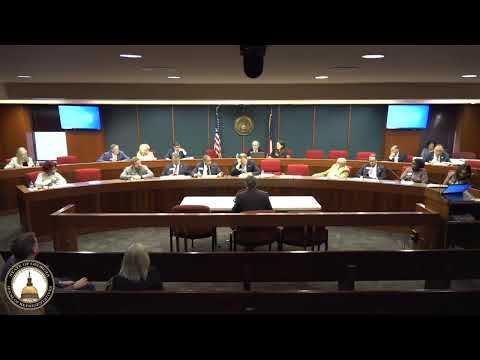
The Agriculture & Consumer Affairs Committee moved HB158 (LC442992S) to do pass after the sponsor and Forsyth County clerk described using the Georgia Superior Court Clerks’ Cooperative Authority to host a single searchable database of county trade-name filings.
The Agriculture & Consumer Affairs Committee advanced HB158 (LC442992S) to do pass after members heard that the bill would centralize trade-name ("doing business as") registrations filed at county clerks’ offices into a single, searchable database maintained by the Georgia Superior Court Clerks’ Cooperative Authority.
Representative Franklin, the bill sponsor, told the committee the measure is “just a bill to kind of attempt to consolidate and make our government more transparent and easier to function.” He said the change would end the need for people to search at each county — "we have about 159 counties" — by allowing clerks to send filings to the clerk’s cooperative authority so users can lookup trade names statewide from one site.
Greg Allen, clerk of superior court in Forsyth County, explained how the system would work: “The clerk's authority … will have a database. All the clerks will send the trade name registrations to the authority. So a person will be able to go to the authority's website, choose the county they're looking for and find the trade … and or they can … type in trade name and find it in any county where it may be registered.” Allen said the cooperative authority already maintains other county filings and the bill would add trade-name registrations to those offerings.
Committee members asked operational questions about who hosts the database and about technical or cost burdens on county clerks. Allen said clerks already have an electronic pipeline to the clerks’ authority and that the change would not add new technology or costs beyond converting a paper-only local record into the existing electronic transfer.
There was an early procedural hiccup when the committee did not have a matching substitute (members referenced LC4428886 in the packet). After staff provided corrected copies, Vice Chair Campbell made a motion that the bill do pass; a second was recorded and the committee approved the bill by voice vote.
What the bill does and next steps: the measure does not transfer authority to the secretary of state; it keeps county clerks as the filing office while requiring transmission to the cooperative authority and a standardized, electronic form if filings go through the authority’s website. The committee recorded the motion to do pass; members resolved the earlier printing error before voting. The bill will move to the next step in the process.