Get Full Government Meeting Transcripts, Videos, & Alerts Forever!
Get email alerts on the Appropriations topic
No spam. Unsubscribe anytime.
Agriculture Department outlines FY 2026 priorities: hemp funding, HPAI response, lab equipment and staffing
Summary
The Georgia Department of Agriculture presented multiple FY 2026 budget priorities to the appropriations subcommittee, including expanded staffing and operating funds for the hemp licensing program, continued support for HPAI emergency response, vehicle and equipment replacement, seed-testing germinators at the Tifton lab, and positions for agronom
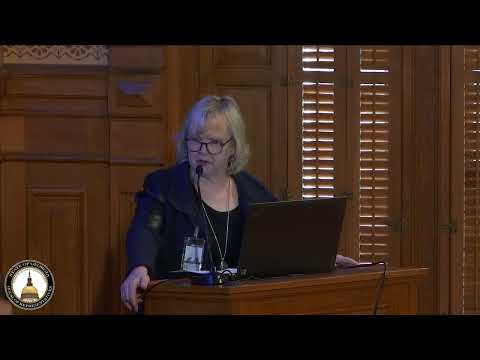
The Georgia Department of Agriculture presented a multi-pronged FY 2026 budget request to the House Appropriations Subcommittee on Economic Development that included funding for the hemp licensing program, continued HPAI (highly pathogenic avian influenza) response capacity, capital equipment and vehicle replacement, and laboratory capacity at the Tifton seed-testing facility.
The department said most governor-request items are administrative adjustments. The department specifically requested roughly $1.1 million in addition to the governor’s budget for the hemp program to fund permanent staff, licensing coordinators, investigators and inspectors, and equipment to manage the licensing workload. The presenter said the hemp licensing work has produced more than $1.84 million in new revenue to the state so far and estimated the program could generate about $3 million in annual revenue once stabilized.
On HPAI, the department said recent responses included testing roughly 50,000 birds in a control area and that the control area and poultry suspension tied to a recent Elbert County event had been lifted. The department asked for roughly $450,000 in decontamination and emergency-response equipment and additional emergency management staffing to maintain readiness.
The department outlined capital and operating asks: roughly $845,000 for capital items (a mobile fuel lab/vehicle and forklift), $2.1 million to replace 57 high-mileage vehicles, and about $1.1 million to finish recommissioning the Tifton laboratory — including a design study and additional germinators to speed seed-certification testing. Department officials stressed seed certification’s role in assuring seed quality for Georgia producers, notably peanut producers.
Other staffing requests included an agronomist for soil amendment and nutrient-management work, a compliance specialist to assist the companion animal team and law enforcement on animal abuse cases, and additional personnel to support meat and protein-sector inspections. The department said federal funding shifts and reduced federal shares for inspection programs are a concern and could require ongoing discussions with federal partners.
Department officials also noted the EV-charging regulation program’s January effective date under state law and requested funding to continue testing and program development begun with Georgia Tech and other partners.