Get Full Government Meeting Transcripts, Videos, & Alerts Forever!
Get email alerts on the Public Safety Policing topic
No spam. Unsubscribe anytime.
State police describe recruiting challenges, overdose/impairment training plans and co-responder pilots
Summary
The Department of Emergency Services and Public Protection and Connecticut State Police told lawmakers they are short roughly 200 troopers, have cut overtime by 7.5% recently, are exploring in-state DRE training (drug-recognition experts) and want to expand co-responder crisis models but need funding to scale them beyond federally supported pilots.
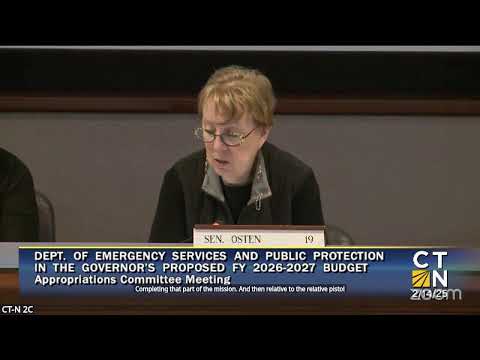
The Department of Emergency Services and Public Protection (DESPP) and the Connecticut State Police briefed the Appropriations subcommittee on a range of public-safety topics, including staffing shortfalls, overtime reductions, crisis co-responder pilots and drug-recognition expert training.
Commissioner Ronnell Higgins told the committee the department currently employs about 928 troopers and estimated roughly 200 vacancies across the force. Higgins described an effort to reassign troopers from administrative roles back into patrol duties where possible and to recruit and hire new officers.
Higgins said a recent push to reduce overtime yielded a 7.5% decline in overtime in the last three months and the department has launched a staffing study to guide redeployment and hiring priorities. "We are trying to make sure our sworn troopers are in the highest best use possible," Higgins told the committee.
Crisis response and co-responder pilots: Commissioner Higgins and Colonel Daniel Lachman described federally funded co-responder pilots in four troops and said they want to expand co-responder coverage (behavioral-health professionals working alongside troopers) statewide. Higgins said the state needs additional funds to scale the program beyond the current federally supported pilots.
Drug recognition, roadside testing and training: Committee members pressed DESPP about proposals to allow roadside phlebotomy; Higgins said he does not favor troopers doing roadside blood draws and prefers partnerships with other clinical providers or a contracted phlebotomy service. The department plans to expand drug-recognition expert (DRE) training and explore hosting training in Connecticut instead of sending candidates to out-of-state programs; the department currently counts about 14 DRE-trained troopers.
Traffic enforcement and directed patrols: Colonel Lachman described a data-driven fatal motor-vehicle reduction initiative launched in 2024 with directed saturation patrols in high-risk corridors; he said the campaign contributed to a year-over-year reduction in some categories of highway fatalities and that the department will continue targeted enforcement and public education.
Other operational items: Lawmakers pressed the department about pistol-permit processing backlogs (officials said they have reduced backlogs and filled vacancies), fleet renewal and lease costs, and the need for barracks and equipment upgrades. The commissioner invited legislators to supply locations where upgrades are needed and offered the department—s outreach staff for town halls and constituent events.
Ending: DESPP and state police leaders said they will provide staffing-study results, additional cost estimates for expanded co-responder coverage and a proposal for in-state DRE training; they requested continued legislative support to recruit, retain and modernize equipment for troopers.