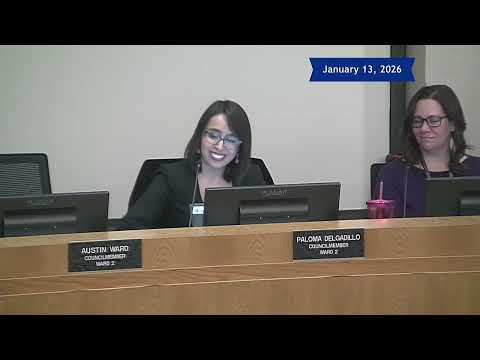
Broomfield council approves first reading of RV, oversized-vehicle limits after heated public debate
Loading...
Summary
Council approved first reading of an ordinance limiting RV parking on public streets to 72 hours in any 14-day period and tightening oversized-vehicle rules; supporters cited safety and neighborhood impacts while advocates for people living in vehicles urged more shelter/parking alternatives.
BROOMFIELD, Colo. — The City and County of Broomfield’s council on Jan. 7 approved on first reading a new ordinance restricting recreational-vehicle parking on public streets and updating rules for oversized and commercial vehicles.
The ordinance limits RV parking on public streets to 72 hours in any 14-day period, permits on-street parking only for loading, unloading, maintenance and trip preparation, prohibits vehicles that are leaking fluids or connected to utilities, and authorizes civil penalties and towing for repeat or serious violations. "So the proposed ordinance limits RV parking on public streets to 72 hours in any 14 day period," staff said at the meeting.
Why it matters: Neighbors and business owners told council that long-term RV and converted bus parking has created persistent line-of-sight hazards, safety concerns for drivers and pedestrians, and blocked access for customers on industrial streets such as Burbank. Several business owners described an owner who had parked a dilapidated bus and RV for months, which they said reduced customers and created a “choke point.”
Public testimony and council scrutiny: Dozens of residents and business owners described safety risks and quality-of-life impacts; several urged a citywide rule rather than a localized response. At the same time, callers representing service organizations warned the rule could disproportionately affect people who lack housing. Kathy Escobar of The Refuge urged council to consider that "people whose RV is their current residence" may have no other option and that safe-parking programs have limited capacity and waiting lists.
Enforcement and alternatives: Staff described a stepped approach focused on education and voluntary compliance, with code officers issuing courtesy notices before issuing violations, administrative citations or summonses. In 2024 the city recorded 91 resident complaints about RVs, issued roughly 58 self-initiated actions and towed four RVs; staff said preliminary 2025 numbers exceed 100 complaints. Police and code staff said towing is a last resort and that tow companies used by the city can store RVs, but noted towing and storage costs may be high for owners.
Council reaction and next steps: Council members raised concerns about impacts on people who live in vehicles, enforcement discretion, and whether a permit approach (used elsewhere) would be appropriate. Several members said they support the ordinance with potential amendments to protect vulnerable residents; one council member signaled a likely amendment at future consideration. The ordinance passed its first reading 9–1, and will return for additional consideration before a final vote.
What happens now: The ordinance will come back for later readings where council may propose amendments addressing exemptions, permits or enforcement details. Staff said they will continue to coordinate with social-service partners about safe-parking capacity and with towing partners on logistics.