
Town committee reviews five concept plans for High Street and Beach Street cottages
Get AI-powered insights, summaries, and transcripts
Subscribe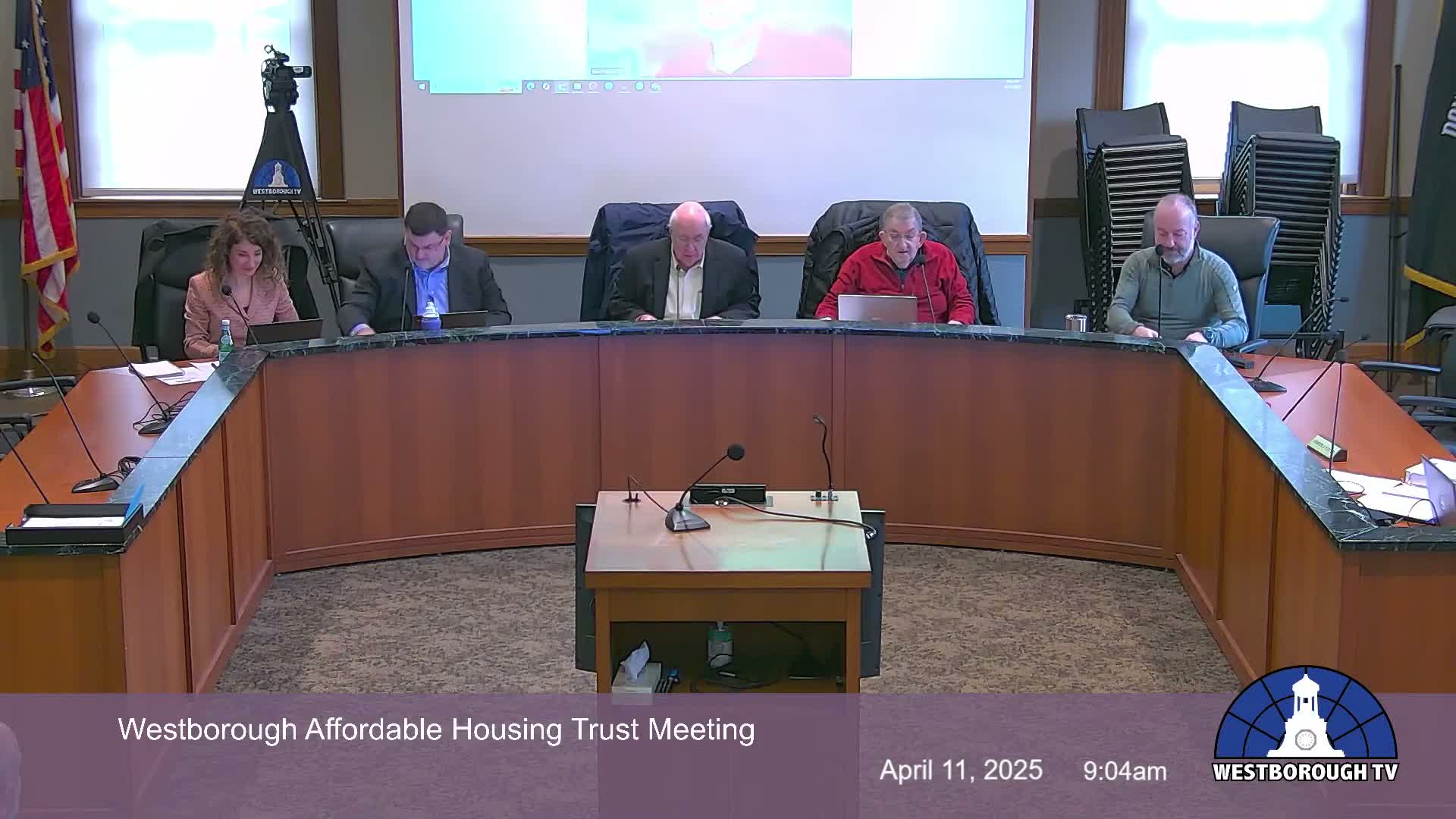
Summary
Designers presented four site concepts for the Town’s HB cottages (High Street and Beach Street): layouts vary from garden-style clusters to townhome rows and hammerhead turnarounds; concepts yield roughly 5–7 units each and raise operational questions (trash, snow storage, fire access, wetlands and demolition costs).
Design consultants presented five early concepts for the Town of Westborough’s High Street and Beach Street (“HB cottages”) affordable-housing site at the committee’s April 11 meeting, with layouts ranging from garden-style clusters to townhome rows and an option with a hammerhead turnaround to improve fire access.
“I'm Mike Grossworth with WDA. I'm the senior landscape architect and project director for this 1,” the designer said while outlining a range of arrangements that aimed to keep building footprints out of an identified sewer easement and retain existing trees where possible. One garden-style concept described central parking with connecting walkways and a total of six units and 15 parking spaces including an accessible stall; a more urban concept yielded seven units with a hammerhead turnaround intended to provide fire-truck maneuverability.
Members pressed several site- and operations-related issues. Committee discussion, supported by consultant comments, said the project team has had preliminary conversations with the conservation agent and wildlife biologists suggesting the large depression on the property is likely man-made and therefore not a regulated natural wetland; the consultant said, however, the team will reconfirm that finding with conservation staff. Members also raised practical questions about trash handling (single dumpster versus individual pickup), snow storage and whether two-story buildings could be served by tower-ladder apparatus, given driveway widths and tower-outrigger clearance.
The package includes larger 24-by-36 drawings that staff will distribute after the meeting; the committee asked members to submit numbered feedback to staff member Kristen so the working group can collate preferences before any formal permitting or RFP process. Designers noted demolition costs at Beach Street may increase remediation expenses and that any final concept will need further refinement for fire access, ADA access and waste-management plans.
Next steps: the committee will accept emailed preferences to Kristen, reconfirm conservation constraints, and use the selected concepts to inform pre-application conversations with permitting bodies and the eventual RFP to developers.