Project Concord pitch draws scrutiny; council lets exclusive negotiation item die
Loading...
Summary
Concord Infrastructure Partners presented 'Project Concord,' a proposed distributed, self‑powered data center pilot promising local jobs and community benefits. After extensive resident questioning about water, batteries, an immunity waiver and LLC transparency, council did not move the requested exclusive negotiation/MOU.
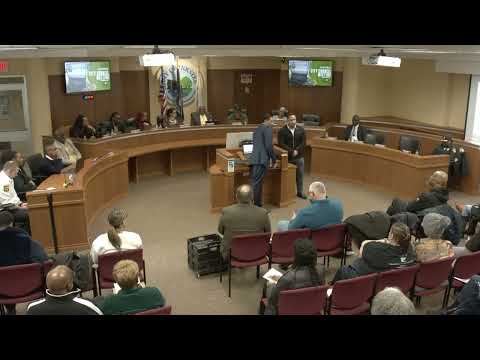
At the Jan. 20 Inkster City Council meeting, Concord Infrastructure Partners presented 'Project Concord,' a proposed distributed data center pilot the company said would bring $285 million in private investment, unlock federal value and produce tens of millions in local wages. Concord asked the city for an exclusive negotiation period and a memorandum of understanding, but council did not move the item and it 'died' for lack of a motion.
Concord representatives Robert Gray and Michael Bardwell told the council the project rests on three pillars: an economic engine meant to generate $8.6 million a year in new municipal revenue, a 'community canopy' of blight remediation plus free mesh Wi‑Fi and local food production using waste heat, and a 'sovereign fortress' of on‑site generation. Bardwell said the campus would be fully self‑sufficient: "We take 0 gallons of water from the Inkster system," and the design includes atmospheric water generation and a closed‑loop cooling system designed to recycle vaporized water.
Presenters said the project would include a Concord Academy to train residents and provide hiring priority to eastern ZIP codes, and estimated roughly 140–200 full‑time roles with salary ranges they described as $70,000–$140,000 annually. They also said the plan includes a 2% top‑line revenue contribution to a community trust and quarterly independent federal forensic audits paid by the sponsor. Concord described a capital stack that, it said, included government incentives and a contractual guarantee of recouping 50% of development costs from federal sources once the project begins.
Residents and elected officials pressed Concord for verification and more detail. State Representative Dylan Regala questioned an assertion that recent federal action had effectively shut down other data center projects, and Andy Gutierrez, staff to Congresswoman Rashida Tlaib, told the meeting: "It is inaccurate to say that what Trump announced on Friday is shutting down every other project except yours," urging presenters to correct their public description of federal policy.
Other questions focused on site selection, whether the project truly would avoid municipal water and power, what batteries would be used, and corporate transparency. Concord said they had formed an LLC for tax and structuring reasons and offered to share incorporation documents if the city elected to proceed. Bardwell described the battery technology as lithium BESS (battery energy storage system) and said the facility would include on‑site treatment for water captured through AWG.
Several residents and a planning commission member urged caution: the commission is updating zoning and recommended the city wait for utility assessments, comparative case studies and a formal community‑benefits package. Multiple speakers objected to signing an MOU at the initial meeting; one audience member said, "For you to wanna come into the city today and get a MOU sign today... that's not fair," urging district‑level engagement.
After the conclusion of questions and public comment, the council returned to its agenda. When the item to consider an exclusive negotiation period with Concord was called, there was no motion and the item died. The record shows the council instead proceeded with other business, including votes approving water loan publishing and bond authorization measures.
What happens next: Concord said it will provide further, more detailed material if the city signals interest and that it expects ongoing community meetings and audits if the project moves forward. Councilmembers and residents said they expect additional documentation, technical assessments and neighborhood briefings before any formal agreement is considered.