
Retailers and law enforcement press committee for stronger tools on organized retail crime
Get AI-powered insights, summaries, and transcripts
Subscribe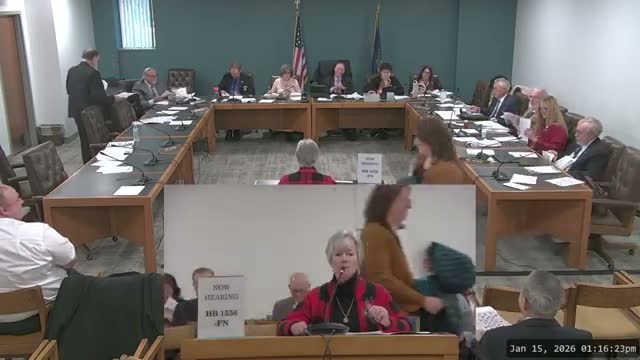
Summary
Business groups and law‑enforcement witnesses told the committee HB 16‑70 must close statutory gaps to address coordinated theft, cargo theft and resale networks; some stakeholders urged a study commission to identify best practices and avoid cross‑statute drafting errors.
Representative Susan DeRoy introduced an amendment to HB 16‑70 to add cargo theft and clarify interstate organized retail crime (ORC) definitions. Retail industry and law‑enforcement witnesses testified that ORC has broad economic effects ranging from inventory loss to higher prices and lost jobs; one cited a US Chamber estimate of roughly $898.7 million in statewide economic cost for 2024 (figure attributed in testimony to the US Chamber of Commerce).
Loss‑prevention professionals and former legislators described ORC as coordinated activity that can include repeated thefts across stores and states, resale networks and ties to other criminal enterprises. "If we only arrest the person carrying the bag but never hold accountable a person giving the orders, the organized retail crime will continue to thrive," one witness told the committee.
Retail‑association counsel and other stakeholders asked for careful cross‑reference work before a repeal‑and‑replace drafting approach, warning that removing conspiracy or other provisions could inadvertently make prosecutions harder. Tom Prasol for the New Hampshire Retail Association recommended a study commission or task force that includes the attorney general's office, county attorneys, chiefs of police and retail stakeholders to build a comprehensive, cross‑checked package rather than quick statutory changes that produce gaps.
State police and municipal leaders indicated support for stronger tools but underscored the need for precise drafting to preserve existing authorities and to avoid federal‑jurisdiction complications for interstate elements. The committee heard proposals to: add aggravated penalties for enterprise leaders, enable cross‑county aggregation of incidents, allow restitution and civil remedies to recover retail losses, and provide enforcement coordination mechanisms.
Ending: Sponsors and stakeholders agreed to continue negotiations and to bring precise amendment language back to committee; some members signaled interest in a subcommittee or study panel to shape a comprehensive, cross‑checked bill.