
NH retirees and investors clash over bill to limit ESG in state pension decisions
Get AI-powered insights, summaries, and transcripts
Subscribe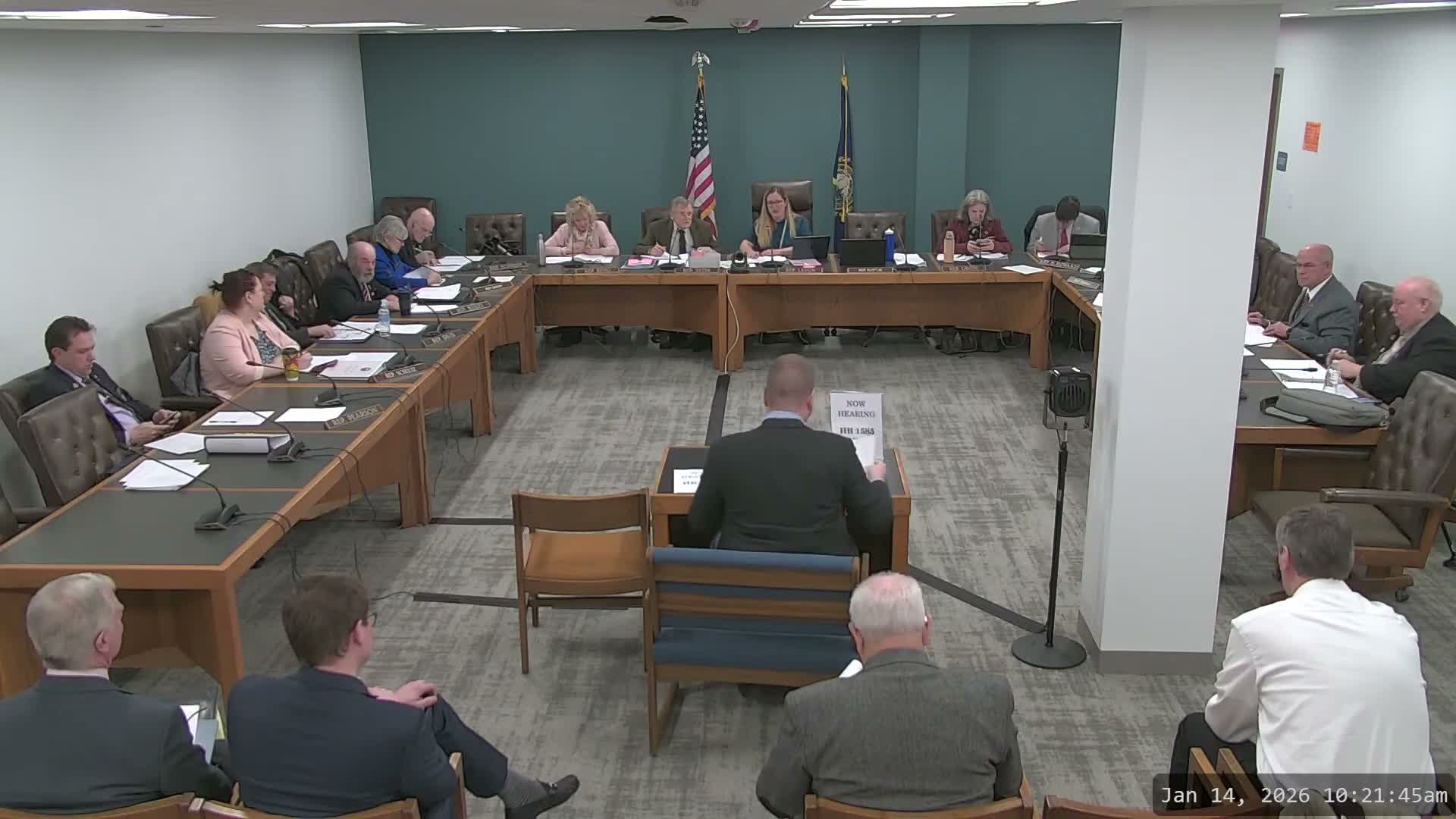
Summary
Witnesses for and against HB 15-85 debated whether state retirement fiduciaries should be restricted to considering only financial factors and required to document proxy-voting analyses. Investor groups warned the bill would raise costs and constrain risk analysis; advocates for the bill said it would increase transparency and protect returns.
The Executive Departments and Administration Committee on Jan. 14 heard HB 15-85, a bill that would constrain fiduciaries of the New Hampshire Retirement System to consider only financial factors when making investment or proxy-voting decisions and require documentation when environmental, social or governance (ESG) factors are considered.
Cameron Schulte, executive director of Heartland Impact (the advocacy arm of the Heartland Institute), told the committee the measure simply codifies a traditional fiduciary standard. "HB 15-85 requires fiduciaries to consider only financial factors when making investment and voting decisions and explicitly excludes environmental, social, political, or ideological objectives from those determinations," he said, arguing the state's $2.46 billion in BlackRock-managed funds and proxy voting practices merited statutory clarity.
Representatives of investor and sustainability groups told a different story. Andrew Collier of Ceres testified in strong opposition, saying the bill would impose burdensome documentation requirements and prevent fiduciaries from evaluating material, investment-related risks such as wildfire mitigation, workforce management or potential fraud. "Prohibiting or limiting investors from examining wildfire mitigation practices puts investment returns and beneficiaries at risk," Collier said.
The Business & Industry Association witness warned the committee the measure could reduce returns and increase local taxpayer contributions if the retirement system's performance weakened. Conversely, Sal Nuzzo of Consumers' Research (identified in testimony as the policy arm of a consumer-protection nonprofit) argued the bill primarily promotes transparency: "This legislation prohibits speculating that's dressed up to look like investing," he said, urging documentation of how proxy-advice recommendations affect shareholder value.
Committee members asked for follow-up from the New Hampshire Retirement System about its current proxy-voting policies and whether internal practices already meet the bill's aims. The committee closed the hearing after receiving testimony and did not take immediate action.
What happens next: The committee requested information from NHRS to clarify current practices around proxy advising and documentation; further deliberation will depend on that follow-up and any fiscal analysis requested by members.