
Sponsor Seeks to Close 'Wet Reckless' Loophole by Counting Certain Reduced Reckless Convictions as Prior DWIs
Get AI-powered insights, summaries, and transcripts
Subscribe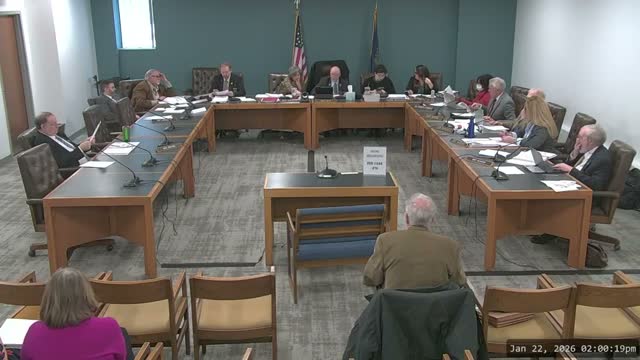
Summary
HB1248 would treat certain prior reckless‑operation dispositions tied to substance impairment as prior DWIs for sentencing within a 10‑year lookback window. Sponsor and state troopers argued it would reduce repeat impaired driving; some members urged careful drafting to avoid Apprendi and sentencing challenges.
Representative Jay Markell introduced HB1248 to close a perceived loophole in impaired‑driving law where prosecutors or courts reduce a DWI charge to reckless operation (a so‑called 'wet reckless') and that reduced disposition does not count as a prior for subsequent DWI sentencing. Markell told the committee that repeat offenses are common and that closing the loophole would help address recidivism.
He cited traffic‑safety statistics and urged the committee to consider amendments to ensure prior reduced reckless dispositions tied to alcohol/drug impairment could be used as a sentencing enhancement within a 10‑year window. Lieutenant Christalom (Storm) of the State Police said the Department of Safety supports the goal of curbing repeat impaired driving but recommended working with prosecutors and the trooper corps on draft language to avoid unintended constitutional or procedural issues, such as making sure any 'look‑back' is properly pled and proven where appropriate.
Committee members asked whether precedent in other states has withstood legal challenge; the lieutenant said several states use similar enhancements and that the department will work with the sponsor on an amendment. Members also discussed the interaction with recent statutory updates and administrative license sanctions.
What’s next: Sponsor and State Police will cooperate to draft an amendment addressing concerns about proof, prosecution practice and Apprendi‑type issues; the committee asked for draft language in a follow‑up meeting.