
Florida State Fire Service Association urges stronger safety measures, pay and on-call compensation
Get AI-powered insights, summaries, and transcripts
Subscribe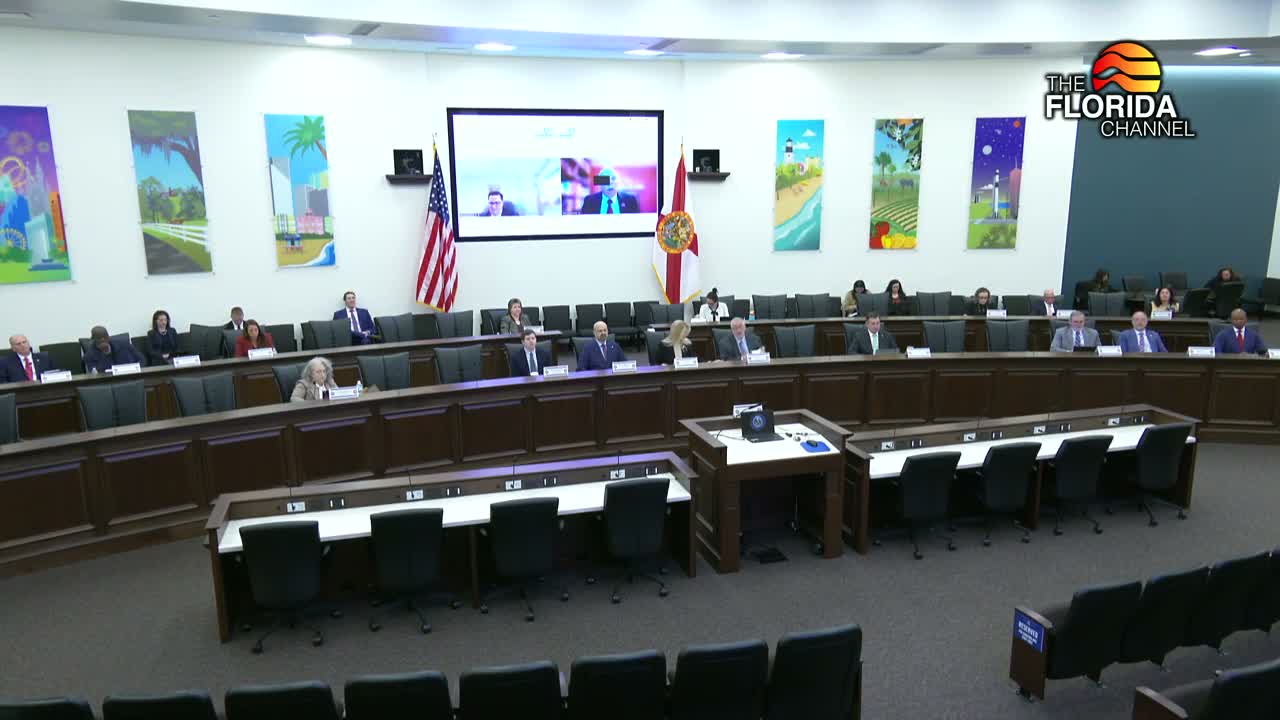
Summary
The Florida State Fire Service Association told the Joint Select Committee that pay and safety provisions remain at impasse and asked for contractual limits on out-of-scope construction work, better on-call and callback pay, PPE laundering and post-exposure decontamination measures, plus wage improvements to aid recruitment and retention.
Philip DeMaria, appearing for the Florida State Fire Service Association (representing state-employed firefighters across several agencies), told the committee the union’s outstanding bargaining requests include limits on requiring firefighters to perform major construction outside their job descriptions, clearer hours-of-work language, higher on-call and callback pay and stronger measures to protect members from hazardous exposures.
DeMaria asked the panel to recommend adoption of the union’s proposal for Article 11 to bar major construction tasks ‘‘far outside’’ firefighters’ position descriptions. He said the union seeks changes to Article 23 on hours and overtime to prevent the state from using extended work periods in ways that avoid paying overtime. On-calls and callbacks — currently compensated at $1 per hour, he said — have not increased in over 20 years, and the union asked the committee to support higher pay for that work.
On safety, DeMaria requested additional personal protective clothing, routine at-work laundering of contaminated gear, on-site shower facilities and a contractual commitment to review industry best practices and research on cancer risk. He described the state’s written response on post-exposure procedures as “absolutely insulting” and cited peer-reviewed research and agency-authored work as supporting the need for stronger decontamination and cancer-prevention steps. DeMaria referred to members who died of occupational cancer while serving in the Forest Service.
The union expressed support for an incentive-based career-development plan but said larger investments are needed to recruit and retain pilot and firefighter positions; DeMaria noted that the Forest Service has four helicopter pilots for seven budgeted positions and that the state often struggles to fill those vacancies.
DeMaria concluded by urging the committee to carefully consider the union’s proposals and to press for good-faith negotiation. He also asked remote participants to confirm an appearance form for the meeting record.
What happens next: The committee received the testimony for the record; Matimore and union representatives said bargaining will continue at the table.