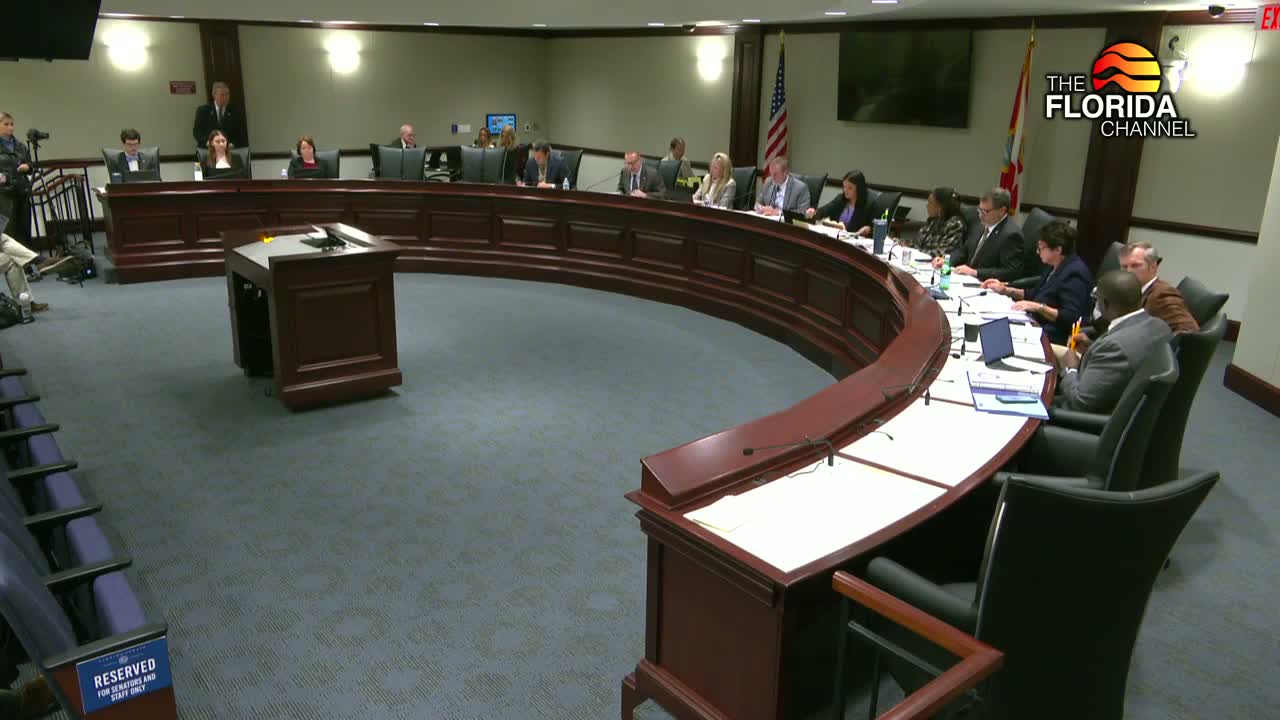
Committee advances SB 548 to clarify impact‑fee methodology and cap extraordinary increases
Loading...
Summary
SB 548 would require plan‑based studies for extraordinary circumstances, cap extraordinary‑circumstance increases at 100% phased over four years, and tighten timelines and refund procedures. Local governments and the League of Cities supported the plan‑based approach while raising questions about appropriate thresholds and implementation.
Senator McClain told the committee SB 548 builds on last year’s growth‑management reforms and would define a "plan‑based methodology" for calculating impact fees, require interlocal agreements to fund extra‑jurisdictional impacts, and cap extraordinary‑circumstance increases at 100% phased evenly over four years.
"This bill provides additional clarifications to those processes, setting forth requirements and importantly setting a cap on extraordinary circumstances at a 100% of the existing impact fee being charged," the sponsor said.
Local-government representatives—including Louis Rotondo, who identified himself as speaking for a municipality—and David Cruz of the Florida League of Cities testified they support the plan‑based methodology in principle but want clarity on the threshold and implementation timelines to avoid sudden, large fee increases that would surprise developers and taxpayers.
Courtney Mooney of the Florida Association of Counties said the plan‑based study should be tied specifically to extraordinary circumstances and should not limit counties' ability to use other methodologies for routine fees. The bill also proposes streamlined refund procedures to avoid court involvement when overpayments occur.
After adopting an amendment that largely mirrored the bill language and clarifying provisions, the committee reported the CS for SB 548 favorably.