Get Full Government Meeting Transcripts, Videos, & Alerts Forever!
Get email alerts on the Right To Repair topic
No spam. Unsubscribe anytime.
Committee tables right‑to‑repair bill after wide technical debate over exemptions and parts‑pairing
Summary
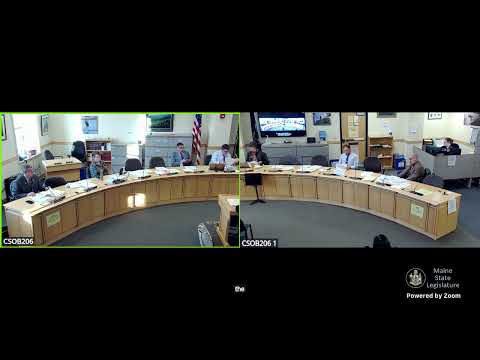
In a work session on LD1908, the committee debated a broad right‑to‑repair measure that would require manufacturers to make parts, tools and documentation available on fair and reasonable terms; stakeholders proposed carve‑outs (B2B/B2G, critical infrastructure, lighting, medical/water‑testing equipment) and the committee voted to table the bill for further drafting.
The committee opened a work session on LD1908 (right‑to‑repair). Staff summarized the bill's core obligations: beginning 2026 an OEM must make parts, tools and documentation available on fair and reasonable terms to independent repair providers and device owners; the draft also prohibits software 'parts pairing' that disables devices when non‑original components are installed.
Senator Mike Tipping (sponsor, online) urged keeping business‑to‑government and business‑to‑business transactions in scope (to avoid leaving schools or municipalities unable to repair devices) and said 'parts pairing' was a crucial new prohibition responding to recent industry practice. Industry witnesses (Consumer Technology Association, Cisco, NEMA) sought specific carve‑outs for enterprise/B2B/B2G contracts, critical infrastructure equipment, lighting products and certain public‑health testing instruments. IDEXX (water testing equipment) asked for an explicit exemption, citing public‑health consequences if laboratory or utility test gear were mishandled.
Stakeholders also debated trade‑secret language and enforcement mechanism: manufacturers asked to remove a private right of action and instead rely on Attorney General enforcement; advocates and the Attorney General’s office recommended keeping an unfair‑trade‑practices enforcement path. Committee members requested model language to define terms such as 'readily available' replacement and 'equivalent or better' replacement devices and asked for state agency input on potential public‑health and critical‑infrastructure exemptions.
After wide discussion and requests for additional data and drafting options (including a later sold/used date for covered devices), the committee voted to table LD1908 to allow sponsors and stakeholders to resolve exemptions, parts‑pairing language, trade‑secret limits and an implementation date.
Next steps: sponsor and staff to reconvene stakeholders, secure additional technical input (water utilities, school technology managers, IDEXX, CTA, AG’s office) and return with revised language and draft amendments.