Get Full Government Meeting Transcripts, Videos, & Alerts Forever!
Get email alerts on the Library Facility Planning topic
No spam. Unsubscribe anytime.
Coos Bay leaders press contingency planning as engineers flag structural risks at downtown library
Summary
City staff, the library steering committee and the public discussed options after a failed $30 million bond and a 2014 engineering review that found inadequate foundation piles; council directed staff to seek a timely safety assessment and the committee to finalize a contingency plan for temporary operations and funding.
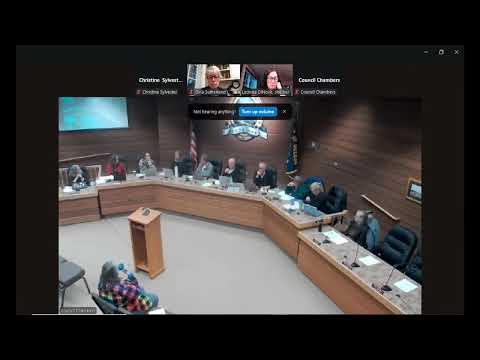
Coos Bay officials and library stewards used a council work session to press ahead on contingency planning after long-running concerns about the downtown library’s structure and the failure of recent bond measures.
Nicole, a city staff member, told the council the library planning effort stretches back to 2014, when an engineering review identified significant foundation and system problems. "We started in 2014," Nicole said, and costs estimated then for repair or rebuilding have since escalated substantially.
The meeting focused on three linked problems: the condition of the downtown building, how the city would keep library services running if the building must be vacated, and how to finance a replacement or major retrofit. The Public Works Director, reviewing the 2014 ZCS geotechnical and structural analysis, said the soils and existing piles are inadequate and that repairing the foundation would require deepening and increasing piles. "The soils there, and then the number of piles and the depth of piles are just not adequate," the Public Works Director said, adding that upgrades to HVAC, electrical and plumbing would likely be required if the building were repaired rather than replaced.
Members of the library steering committee urged broader thinking about a new facility’s role. "This cannot just be a library," a steering committee member said. "It has to be a community center." Committee members and residents discussed mixed-use approaches in which a library shares space with housing, nonprofit meeting rooms or other civic uses — models the staff said have worked in other Oregon cities.
Councilors and committee members reviewed prior financing attempts: earlier proposals in the planning history were described as roughly $20–25 million, and a later bond request reached $30,000,000 and failed. Several speakers said voter resistance to another bond means the city must pursue alternatives, including developer partnerships, lease revenue or a capital campaign.
Because staff and committee members said the building’s usable life noted in 2014 (five to 10 years) has likely lapsed, the council directed a near-term safety focus and contingency planning. Committee members described preliminary contingency logistics: a mall space of about 19,000 square feet (the Joanne Fabrics space) was identified as available for off-site storage at about $0.79 per square foot — roughly $15,000 per month — but committee members cautioned that such a space could store the collection without providing a full customer-service experience.
The group noted operational impacts of a temporary or reduced service model: lower circulation and visits could reduce district operating revenue and produce a cascading effect on staffing and programs. Councilors asked staff to include those costs in contingency budgets and to calculate short- and medium-term impacts on operations.
On timing, members agreed a more definitive determination of staff safety and occupancy is needed. The Public Works Director and other staff said a contracted safety assessment could be arranged but that availability and cost would vary; staff estimated a review could be completed in under a month depending on partner schedules. Council asked staff to reach out to building-inspection partners or an outside engineer, and for the steering committee to finalize contingency options that keep staff employed and services available while storage and temporary service arrangements are established.
Resident Cara Long, a member of the library foundation board and the steering committee, urged creative partnerships, citing projects elsewhere where unrelated public and nonprofit entities shared facilities to make large projects feasible. "The National Guard and the YMCA are in one building," Cara Long said, describing shared-use models as possible templates.
Next steps recorded at the session: staff will pursue a timely safety assessment for staff occupancy, the library steering committee will refine a contingency plan that identifies temporary service locations and storage solutions and will return to the council with options for financing and potential developer partners. No formal council action or vote occurred at the meeting; the session was a work session focused on planning and direction.
What happens next: staff and the steering committee will report back with a safety assessment and a short-list of contingency measures and financing options for council consideration.