Get Full Government Meeting Transcripts, Videos, & Alerts Forever!
Get email alerts on the Fiscal Sponsorship topic
No spam. Unsubscribe anytime.
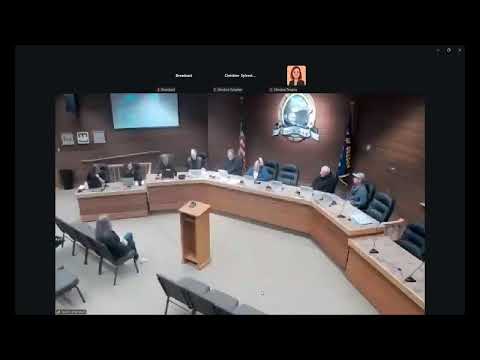
Coos Bay parks commissioners hear fiscal-sponsorship pitch from Charitable Partnership Fund; questions remain on contracting and payments
Summary
A representative from a Charitable Partnership Fund told the Coos Bay Parks work session CPF can incubate volunteer groups, handle donations and grants under CPF's tax ID while retaining a 5% administrative fee; commissioners and a cemetery volunteer raised questions about city contracting, payment methods and whether some groups should form standalone 501(c)(3)s.
A Charitable Partnership Fund (CPF) representative told the Coos Bay Parks work session that CPF can house volunteer programs, accept donations and apply for grants under CPF's tax identification number while retaining a 5% administrative fee.
"We retain 5% of funds, donated," the CPF representative said, explaining that the remainder is available for program expenses and that CPF typically pays invoices directly or distributes funds for specific purposes with receipts required. The representative added that CPF generally lets the volunteer program decide where leftover funds should go if a program winds down, provided the recipient is a qualified charitable organization, noting CPF must avoid actions that could endanger its tax-exempt status.
Why it matters: The arrangement would give Coos Bay volunteer groups a low-cost fiscal sponsor and a route to accept donations and grants without forming separate nonprofits; the structure also raises questions about how projects on public property would be contracted and whether CPF-held funds would alter who must follow city procurement rules.
Commissioners pressed several operational details. One commissioner asked whether CPF can support capital projects on city property and whether CPF can hire contractors; the CPF representative said CPF can hire contractors and execute contracts as the nonprofit of record but will not take title to real property because that creates liability and complicates unwinding a program. "We would be the nonprofit of record, so we would be the technical employer," the representative said.
Commissioners also sought clarity on grants and grant writing. The presenter said CPF can submit grant applications under CPF's name and tax ID and will review applications for fit with program objectives; CPF would supply its financials to granting entities as standard practice. The presenter noted he has helped groups complete IRS Form 1023 applications to transition into standalone nonprofits and said there is usually no transition fee when programs move out and form their own organizations.
Public commenters raised practical concerns. Cricket Souls, who introduced herself as "the volunteer manager of the cemetery" in Coos Bay, said accepting Venmo or other credit-card-style payments is important for some groups but that school-affiliated projects sometimes cannot use those services. "So that would be a limiting factor for the cemetery," she said, adding that at the current stage forming a dedicated 501(c)(3) might be a better option for her group.
Financial transparency items were discussed: commissioners noted CPF's publicly filed Form 990 (the presenter referenced the most recently filed Form 990 in November 2024) and a line item showing a $115,000 contractor payment; the CPF representative said such large consultant payments typically reflect direct program expenses.
Next steps: Commissioners and staff said they will continue the discussion at the February work session to review draft memoranda of understanding and address coordination with city procurement and the adopt-a-park program. The work session also flagged a separate defensible-space project tied to a roughly $75,000 grant that city staff awarded, which commissioners said they would revisit.
The Coos Bay Parks work session concluded with agreement to return to CPF and related items at the February meeting for further review.