Get Full Government Meeting Transcripts, Videos, & Alerts Forever!
Get email alerts on the Housing Production Strategy topic
No spam. Unsubscribe anytime.
Sandy planning commission votes 6–1 to recommend housing production strategy with DLCD edits
Summary
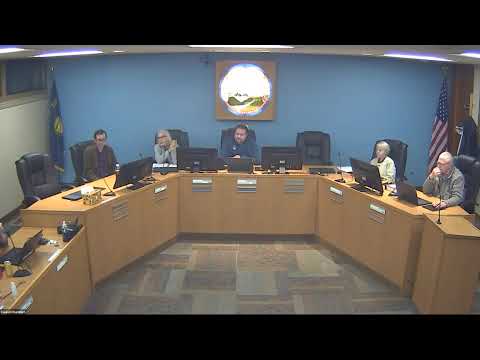
The Sandy Planning Commission voted 6–1 on Oct. 29, 2025, to recommend that the City Council adopt the city’s Housing Production Strategy, asking staff to incorporate preliminary edits from the Department of Land Conservation and Development (DLCD) before Council review.
The Sandy Planning Commission recommended the City Council adopt the city’s Housing Production Strategy (HPS), moving the plan closer to final approval while directing staff to incorporate preliminary edits suggested by the Department of Land Conservation and Development.
Tim Wood, project manager with the FCS Group, told commissioners the HPS builds on the city’s housing-capacity analysis and “identified a great deal of housing need close to 2,500 new dwelling units over the next 20 years.” He walked the commission through strategies intended to address constraints on development, including measures to mitigate the impact of a wastewater consent decree, pursuit of nonlocal funding for wastewater infrastructure, and a construction excise tax to seed an affordable housing fund.
Wood said DLCD provided early, nonbinding feedback and recommended making several implementation steps more concrete (for example, changing language such as “consider adoption” to an explicit commitment to adopt when appropriate). He described key strategies covered in the HPS: adopting zoning amendments to allow more middle housing (duplexes, triplexes), creating measurable success criteria for accessible-design standards, monitoring and registering short-term rentals, and preserving manufactured-home parks.
Commissioners pressed staff on specifics. Commissioner O’Leary asked whether Sandy currently requires accessible units in multiunit developments; staff said Sandy’s municipal code does not. Commissioners also debated the construction excise tax (CET): Wood described how a 1% CET on construction value could generate dedicated funds for affordable housing programs and incentives but noted it would take years for revenues to accumulate. Kelly (staff) and the city attorney discussed the unusual review role DLCD currently plays and the timeline to adopt the HPS before year-end, driven by state deadlines.
Commissioner Malone moved to recommend that the City Council adopt the HPS as Exhibit A and supporting findings in Exhibit B and to include modifications and clarifications recommended by DLCD as prepared by staff. The motion was seconded. In a roll-call vote the commission recorded six votes in favor and one opposed: Crosby—Yes; Lee—No; Malone—Yes; Zawaskey—Yes; Pullen—Yes; O’Leary—Yes; Chair Wagner—Yes. The motion passed 6–1.
Next steps: staff will prepare the redlined edits reflecting DLCD’s comments and forward the HPS, with those changes, to the City Council for a legislative public hearing tentatively scheduled for Nov. 17. Commissioners were advised that if they have concerns they may testify at the council hearing as private citizens; the attorney cautioned that doing so should be limited to ensure it is not misconstrued as an ongoing commission practice.
The commission closed the HPS hearing and moved to the next agenda item.