Get Full Government Meeting Transcripts, Videos, & Alerts Forever!
Get email alerts on the Homelessness topic
No spam. Unsubscribe anytime.
Resident tells Spokane County commissioners HUD count underestimates homelessness; commissioner cites permit gains and urges policy focus
Summary
During the Jan. 20 meeting, Becky Dickerhoof told Spokane County commissioners that HUD’s Point-in-Time count underestimates homelessness and urged a $15.90 tax; Commissioner French responded with 2025 permitting figures and said the issue is about policy, not money.
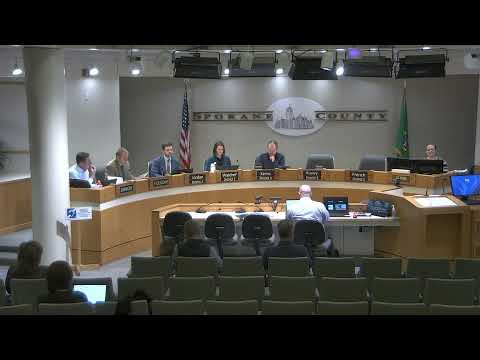
Becky Dickerhoof, of Spokane City, told the Spokane County Board of County Commissioners on Jan. 20 that the U.S. Department of Housing and Urban Development’s upcoming Point-in-Time (PIT) count is “widely considered to be an undercount by homeless advocates” and urged the board to enact a $15.90 tax to address the shortage of affordable housing.
Dickerhoof cited the city’s 2024 longitudinal systems analysis, saying the regional number of people experiencing homelessness was “more than 7,200.” She also raised short-term cost pressures, noting recent rises in insurance premiums for people on ACA plans and Medicare and Medicaid, plus increases in electricity costs, and said those trends, combined with what she described as the federal administration’s decision “to not pay already awarded grants,” could push more people into homelessness.
The remarks drew a response from Commissioner French, who said the debate around the proposed tax is “not about money. This is about policy.” French provided permitting figures, saying that for 2025 the city of Spokane permitted “145 homes,” while the county was “well over 800 homes,” and argued that policy changes that spur development would increase housing availability.
The public comment and commissioner exchange matter because HUD’s PIT count is used in funding and planning decisions, and local officials and advocates differ on whether counts and current policies accurately reflect need. The board did not take action on new housing taxes or programs during the meeting; the agenda moved on after the exchange.
What happened next: the board approved its consent agenda and announced two planned executive sessions on pending litigation; no substantive decisions about homelessness were made at this meeting.