Get Full Government Meeting Transcripts, Videos, & Alerts Forever!
Get email alerts on the Zoning topic
No spam. Unsubscribe anytime.
Residents urge council to revisit Clearview’s 10,000-foot cannabis buffer
Summary
Multiple Clearview residents told the Snohomish County Council the 2023 zoning change creating a 10,000-foot buffer stranded a long-running cannabis retailer and urged the council to sponsor an amendment to reduce the buffer to 2,500 (or 5,000) feet; commenters cited lost tax revenue and jobs and asked for transparency about the rule change.
Several Clearview residents used the public-comment period at Wednesday’s Snohomish County Council meeting to urge the council to revisit a 2023 zoning change that created a 10,000-foot buffer for cannabis retailers in a rural zone.
Patrick Ann, a local business owner who identified himself as owner of "Hangar 420," said the site had operated legally as a cannabis retail store for about 10 years but was left "stranded" after a tenant change because the new buffer made continued retail use impossible. Ann asked "for one council member to sponsor a code amendment to reduce the buffer to 2,500 feet, or if necessary, 5,000 feet," and attributed roughly "$1,330,000 in lost tax revenue" since March and the loss of 14 full-time jobs. He also said a county budget shortfall figure he had seen (about $23,600,000) "could be wrong."
Nicholas Gross, identifying himself as a Clearview resident, asked "why and how this law was changed," questioned whether the change had been driven by private interests and said he will attend future meetings to press for transparency. Ashley McDonald, a lifelong Clearview resident, called the 10,000-foot restriction "unnecessarily restrictive" and urged allowing more than one dispensary in the Clearview Corridor to support access to medical cannabis and local entrepreneurs. Julie McDonald, also a longtime resident, asked who benefited from the change and requested the council explain the rationale for moving from a 2,500-foot standard to 10,000 feet.
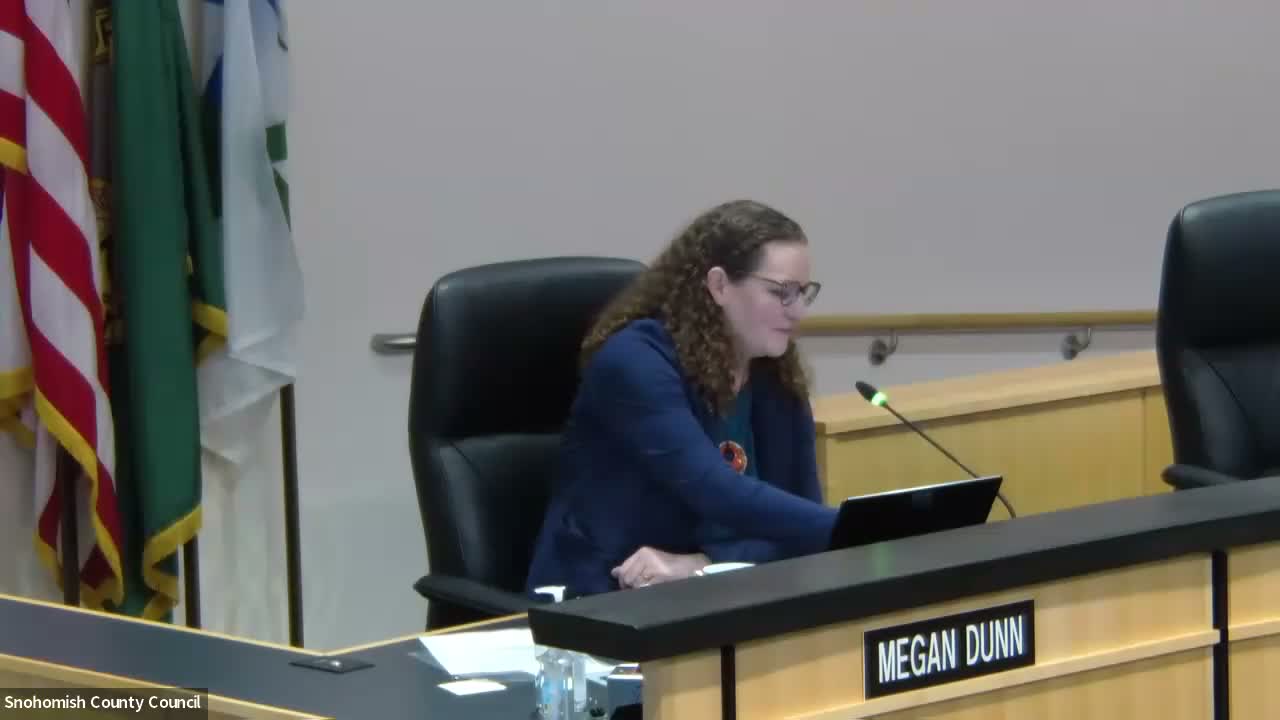
Chair Dunn closed public comment after no remote hands were raised and invited commenters to provide contact information for staff follow-up. The council did not take action on zoning during the meeting; public speakers asked the council to sponsor or otherwise initiate a code amendment process for consideration at a future date.