Get Full Government Meeting Transcripts, Videos, & Alerts Forever!
Get email alerts on the Public Safety topic
No spam. Unsubscribe anytime.
Spokane County reviews real-time crime center gains, privacy trade-offs as ongoing costs loom
Summary
Sheriff's office presented year-one RTCC metrics showing dozens of recoveries and arrests tied to ALPR-assisted work and argued reduced statewide 'nationwide lookup' access limits investigative capability; commissioners pressed staff on costs and long-term funding as ARPA support winds down.
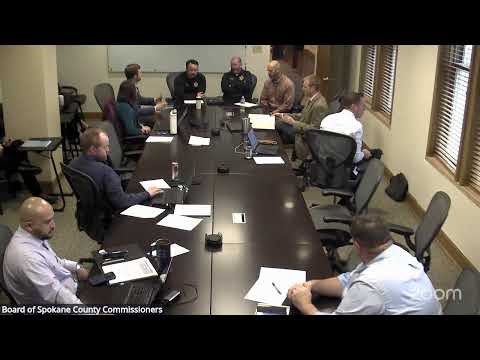
The Spokane County Sheriff’s Office on Jan. 20 presented a year‑in‑review of its Real Time Crime Center, saying the unit’s analysts logged 2,172 activity entries in 2025 with 211 documented successes and that automated license‑plate reader (ALPR) tools contributed to a drop in vehicle theft reports.
Lieutenant Justin Elliott, who led the briefing, told the board the ALPR program has driven recoveries countywide: “ALPR cameras ... vehicle theft reports had declined by 54%,” he said, citing county and regional tallying of recoveries and arrests. Presenters said the RTCC’s work led to 257 recovered vehicles and 143 arrests in the county and valley during 2025, and they described examples in which analysts narrowed suspect vehicles and assisted patrol to rapidly resolve incidents.
At the same time, staff described a recent operational choice to disable the nationwide ALPR lookup while the county and other agencies wait for state guidance. The change narrows cross‑state searches: staff said turning off nationwide lookup prevents county analysts from directly querying out‑of‑state ALPR pools and likewise prevents outside agencies from querying Spokane’s database.
The sheriff’s office argued that the constrained access changes investigative timeliness. “Shortening down the retention period to 72 hours would significantly diminish our ability to fight crimes,” representatives told commissioners during a broader discussion of proposed state rules. They described frequent audits of RTCC use, planned policy updates and monthly audits to ensure compliance with state law and internal rules.
Commissioners pressed on costs and sustainability. Staff reported spending roughly 80–85% of ARPA funds allocated to the RTCC and estimated ongoing annual costs of roughly $1.2 million to $1.7 million when grant support ends. Commissioners discussed options including charging partner jurisdictions, negotiating contributions from the City of Spokane or other contract cities, and seeking state grant support.
Advocates at the briefing said the RTCC's technology and analyst support reduce time spent by patrol and detectives on preliminary investigative work and cited non‑criminal impacts — for example, helping reunite missing persons with family members. Staff emphasized continued efforts to reduce overtime, pursue external funding, and document program impacts for future budget decisions.
What happens next: staff will continue monthly audits and policy revisions and will work with county budget and regional partners to scope sustainable funding options before ARPA funds are fully expended.