Get Full Government Meeting Transcripts, Videos, & Alerts Forever!
Get email alerts on the Utilities topic
No spam. Unsubscribe anytime.
Monmouth leans toward staged base-rate increases and multi-tier consumption pricing for water
Summary
A consultant told the council the city’s base meter fees cover about 30% of fixed costs and recommended raising base fees toward a 50% target and adopting a multi-tier consumption structure; councilors favored a two-step increase and a multi-tier conservation rate and asked staff to proceed with a formal rate study focusing on a 3–5 year capital plan.
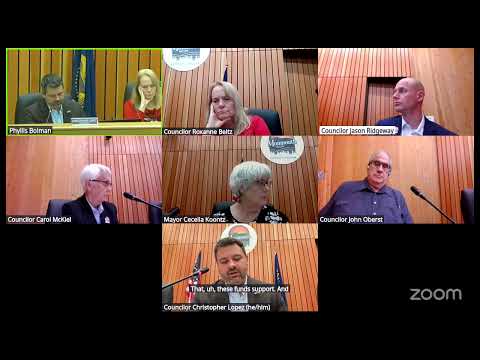
Monmouth City Council gave staff direction Dec. 2 to proceed with a formal water-rate study after a consultant outlined options to bring fixed charges closer to industry guidance and to bolster capital reserves.
Tim Tice of the Oregon Association of Water Utilities presented foundational data and options. Using a three‑year average, Tice said the system produced about 401 million gallons and sold about 359 million gallons; the city serves nearly 3,000 connections and a typical single‑family household uses about 7,000 gallons per month (roughly 9.3 billing units). He said the city’s current base (fixed) charges cover roughly 29–30% of fixed operating expenses, while industry guidance suggests raising that share toward 50% to better match fixed costs.
Tice recommended simplifying the meter‑class structure (from six or seven classes down to residential, commercial and an outside/irrigation class), raising monthly base charges in staged steps (an example model showed a move from a $25.02 base for a typical single‑family account to $33.53 in year one and to $38.53 in a later step), and implementing a three‑tier consumption rate that charges higher unit prices for higher usage tiers to promote conservation.
Councilors discussed impacts on households that water lawns seasonally and on large commercial users. Several councilors favored a staged (two‑step) approach to increase the base service fee, and a multi‑tier consumption structure to encourage conservation while limiting disproportionate burdens on low-usage households. Councilors also debated whether to base capital planning on a near-term 3–5 year CIP (higher near-term costs) or a 20‑year average (which spreads costs over a longer period); a majority favored the shorter 3–5 year horizon for budgeting and cash‑flow forecasting.
Staff said they will ask the consultant to produce a formal rate study incorporating council direction (two‑step base increase, multi‑tier consumption, and a 3–5 year capital plan) and to return with detailed numbers for the city’s 2026–27 budget process.
What’s next: the formal rate study will be completed and presented to council for adoption considerations in time to feed the next budget cycle.